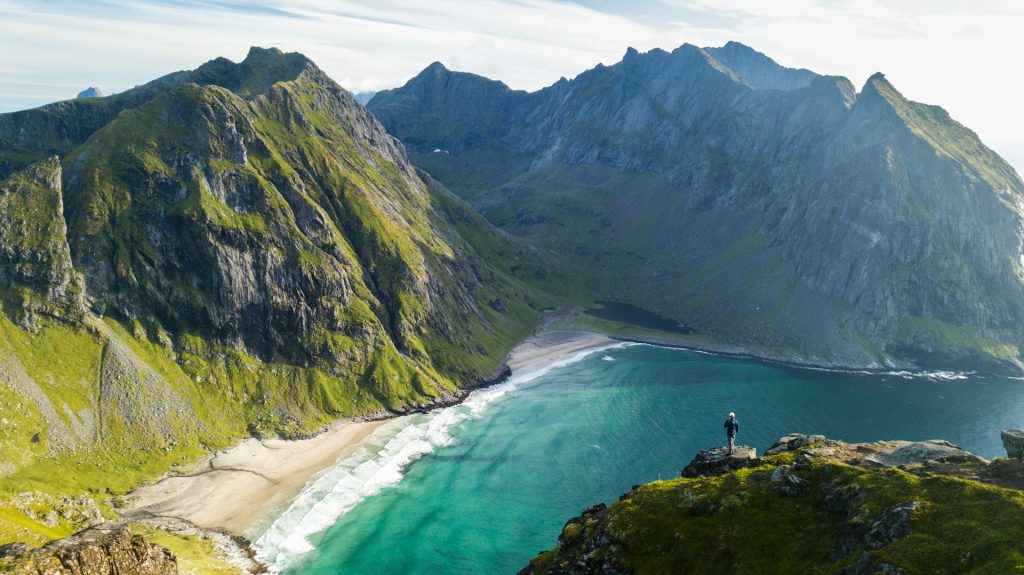
If you dream about waking up to the sound of waves and a skyline of granite peaks, wild camping in Lofoten is as good as it gets. The islands are built for tents and small adventures, with white sand beaches, teal water, and alpine heaths only a short hike from the road. The catch is that Lofoten is fragile, windy, and busy in summer. To keep it special, you need to know the rules, pick smart spots, and camp like a considerate guest.
In short, you can wild camp in Lofoten under Norway’s right to roam, as long as you follow a few key rules. Pitch at least 150 meters from the nearest house or cabin, stay a maximum of two nights in the same spot on unfenced land, and never camp on cultivated fields, meadows, or lawns. Some beaches and trailheads have extra local restrictions, and there are plenty of designated campsites close to villages when wild camping is not appropriate. If you think in terms of leaving no trace, you will be fine.
Let’s take a deeper dive into the world of wild camping in Lofoten.
The Legal Basics: Right to Roam, With Limits
Norway’s right to roam, allemannsretten, allows anyone to pass through and camp on uncultivated land. In practice, that means heath, mountain, forest, and much of the rocky or sandy coast. You must keep at least 150 meters from the nearest inhabited building, which is roughly the length of a football field. If you are unsure whether land is cultivated, look for mowing lines, grazing fences, or clear signs of farming. If someone has obviously cared for that land, do not pitch there.
The time limit matters. You can stay up to two nights in the same place without asking the landowner. In the high mountains or remote terrain where people rarely go, longer stays are usually fine, but in Lofoten you are rarely far from homes and farms, so stick to the two night rule.
A few areas in Lofoten have local rules to protect nature and manage crowds. You will see signs at popular beaches, car parks, and trailheads that specify where tents are allowed or not allowed. If a sign says no camping or tenting only in marked zones, that is the end of the discussion. I have watched rangers kindly explain this to people who simply had not read the board.
Where Wild Camping Works Best
Lofoten rewards a little effort. Short hikes over a headland or up a valley usually lead to quiet, legal spots beyond the bustle.
Beach fringes with natural grass above the dune line can be good, as long as tents are placed well above the highest tide line and never on the dunes themselves. Mountain plateaus a kilometer or two from the road are outstanding in calm weather, with flat heather and views in every direction. Inner fjord edges often have small shelves above the shoreline that are out of sight of houses.
Close to villages and iconic viewpoints, think differently. Popular places like famous beaches and the busiest trailheads often have restrictions or are simply too crowded for a good experience. When I guide friends, we treat those as day destinations, then walk on for camping. If you want to base near surf spots, stay at the local campsite and enjoy the facilities. It keeps the wild feeling where it belongs.
Not Sure About a Spot? Use This Quick Checklist
I do this mental run-through every time, especially on the islands:
Distance and sightlines. Am I 150 meters from houses and out of direct view of anyone’s living room or garden?
Ground and tides. Is the pitch above the last seaweed line, on durable ground, and not on dunes, meadows, or marsh?
Wind and weather. Can I anchor the tent deeply and safely if it gusts to 20 to 30 knots at 3 a.m.?
Access. Is my car parked only in a marked space and not blocking tractor tracks or private driveways?
If any answer is shaky, I keep moving.
Weather, Wind, and Midnight Sun
Lofoten’s beauty comes with turbulence. Wind can arrive out of nowhere, then keep you awake with flapping fabric and sand. Bring a sturdy three-season tent with full fabric inner, long guylines, and extra pegs. Use long stakes or sand pegs on beaches, and double guy the windward side. In very soft ground, bury a filled stuff sack as a deadman anchor. If the forecast shouts gale, consider a lower valley or a sheltered campsite instead of a beach ridge.
From mid May to late July, the midnight sun does not really set. It is magical, but you may sleep poorly. Pack a proper sleep mask. From late August into April, nights are dark, and on clear evenings you can see northern lights. Winter wild camping is for experienced folks only. Snow, ice, and polar lows turn small mistakes into serious problems. If you are unsure, base at a winter-open campsite and do day tours.
Fires, Stoves, and Cooking
Norway has a general no open fire rule in forests and uncultivated land roughly from 15 April to 15 September, except when conditions are clearly safe after heavy rain or in designated fire pits. Lofoten’s coastal wind complicates that. Use a camping stove rather than making a fire, especially on or near beaches where driftwood fires leave ugly scars. If a campsite provides a fire pan or grill, great, use it there.
Sea breezes chill fast, even in July. I rely on a windscreen and a stable stove. Boil water fast, add calories, and get back into the sleeping bag for sunset.
Water, Toilets, and Waste
You can usually fill bottles from streams high above houses and farms. On the coast, some streams cross pasture before reaching the sea, so treat or boil if there is any doubt. In villages, use public toilets at car parks, ferry quays, and trailheads. Lofoten’s municipalities invest a lot in facilities, but they cannot cover every cove.
For human waste in the wild, walk well away from water, trails, and camp, dig a small hole 15 to 20 centimeters deep, and cover it properly. Pack out all toilet paper and hygiene products. In busy areas, wag bags are the cleanest option. All other trash goes with you. If the nearest bin is full, do not balance a bag on top. Take it to the next one.
Parking and Car-Based Camping
Overnighting in a car or camper is only allowed where parking and camping are permitted. That means marked overnight parking areas, official rest areas, and campsites. Many scenic pullouts have no camping signs for a reason, often because of access for emergency vehicles or local residents. Never park on private farm tracks, turnarounds, or grass verges. If you drive a van, think of wild camping as hiking with a tent, not parking wherever there is a view.
Dogs, Birds, and Grazing Animals
From spring through summer, birds nest on beaches, meadows, and cliffs, and sheep graze a lot of open land. Keep dogs on a leash and under control, not only because the law requires it in this period but because a single sprint through a nesting area can destroy a season’s effort. Give sheep space. They are curious, but a ewe will protect her lamb if you crowd them. If you hear seabirds crying loudly above a beach, you are too close to nests. Move on.
Drones and Quiet
Lofoten’s silence is a big part of the experience, especially at 1 a.m. under the midnight sun. Drones are often not permitted near bird colonies and nature reserves, and they do not mix well with tents and sleep. If you plan to fly, research local rules ahead of time and never launch over a camp or crowded beach. If someone is already camped nearby, ask before you buzz.
Picking a Good Pitch on Beaches and in the Hills
On beaches, I look for a small, grassy hammock just behind the first dune ridge, never on the dune itself, and always above the wrack line. I lay the tent footprint down and watch the wind for a minute. If sand is blowing over the footprint, I choose a different place or shift to a grassy hollow. In strong wind, point the narrow end of the tent into the gusts, peg from the windward side first, then tension guys gradually.
In the hills, I avoid saddles where wind accelerates and pick a flat shelf on heather or short moss. If the soil is fragile, protect it by moving the tent one meter after the first night or by choosing a site with resilient ground. On wet tundra, a few flat rocks under the pegs help with holding power and reduce damage.
What To Pack For Lofoten Wild Camping
Lofoten asks a bit more of your kit than a calm inland forest. At a minimum, bring:
A robust tent with full fly and solid poles. Mesh-heavy designs struggle in wind and blowing sand.
A warm sleeping bag and a high R-value pad. Even in July, nights can dip close to 40 to 45 F, and cold comes up from the ground.
Extra guylines, long stakes, and a repair sleeve. I once fixed a bent pole at 2 a.m. and was grateful for that tiny piece of aluminum.
A compact stove with a good windscreen. Gas works well. Alcohol stoves can be fussy in wind.
Water treatment, headlamp, sleep mask, and bug net. Mosquitoes are not terrible on the coast, but some valleys can be lively in July.
A flexible clothing system. Think quick-drying layers, a real rain jacket, and warm hat and gloves even in summer. You will wear them.
Timing Your Trip
For first timers, June to early September is the sweet spot for wild camping on foot. Trails are clear, snow is mostly high, and ferries and shops run frequent schedules. May can be brilliant and quiet, but snow patches linger on north slopes, and nights are colder. From mid September, the islands calm down, and the light turns golden. Weather, however, swings harder. If your main reason is northern lights, come from late September to March, but consider using campsites or cabins as anchors and save wild camping for calm windows.
Camp Near People, Respect Their Home
Lofoten is not a wilderness park. People live, farm, and fish here, with racks of drying cod, tractors on narrow roads, and kids on bikes. If a local asks where you plan to pitch, assume they are trying to help you avoid a bad spot or a rule you have not seen. A simple “we will move if this is not ok” goes a long way. Leave the place cleaner than you found it, and the welcome will stay warm.
When a Campsite Is the Right Call
Sometimes the smart move is to use a campsite and walk to your wild place in the morning. If the wind is up, the car park is crowded, or signs restrict tents, do not force it. Lofoten has many lovely campsites close to trails and beaches, with kitchens, showers, and places to dry gear. I often combine the two, a night or two wild, a night to reset, then back out. It keeps both the islands and your patience in good shape.
A Simple, Low-Drama Strategy
If you want a blueprint that rarely fails, try this. Park only in marked places. Hike 30 to 60 minutes away from the road. Choose a durable surface above the tide line or on heather, not on dunes or meadows. Pitch neatly with strong anchors. Cook with a stove, keep voice and lights low after midnight, and pack out everything. If a place feels too exposed, too busy, or too close to someone’s house, it probably is. Move on. Lofoten is full of good options for people who give it a little space.