If you have ever wondered what it feels like when the sun simply does not rise, the polar nights in Norway are your answer. North of the Arctic Circle, winter brings a stretch of weeks where the sun stays below the horizon. It is not pitch black all day, but the light is brief and blue, and the sky often burns with northern lights after dark. I grew up with this rhythm of the year, and I still look forward to the quiet beauty of the mørketid, which literally means “the dark time.”
In short, the polar night is a natural phenomenon that occurs in Norway’s far north each winter. Tromsø typically has polar night from late November to mid January, while Svalbard experiences it roughly from late October to mid February. Towns just above the Arctic Circle like Bodø and Lofoten do not get a true polar night, but days are very short and the sun barely clears the horizon. If you plan well, bring the right layers, and lean into the slower pace, it can be an extraordinary time to visit.
Let’s take a deeper dive into the world of polar nights in Norway.
What Is The Polar Night, Exactly?
The polar night happens when the tilt of the Earth keeps the sun below the horizon for at least 24 hours. In practice, that means several weeks with no direct sunshine in places like Tromsø, Hammerfest, Alta, and Longyearbyen on Svalbard. You still get twilight in the middle of the day. On clear days, that twilight can be surprisingly bright and beautifully blue. On overcast days, it feels dim and cozy, the kind of light that makes Norwegians light candles and settle in with coffee.
There are degrees of darkness. Civil twilight gives you enough light to walk around and take in the landscape. Nautical and astronomical twilight are darker, a deep indigo that photographers chase for long exposures and aurora backdrops. The experience changes constantly with clouds, snow on the ground, and moonlight. A full moon on fresh snow can make midnight look like early morning.
Where In Norway You Can Experience Polar Night
The Arctic Circle cuts across Nordland county just south of Bodø. Everything north of that line gets some form of the phenomenon, with true polar night the farther north you go.
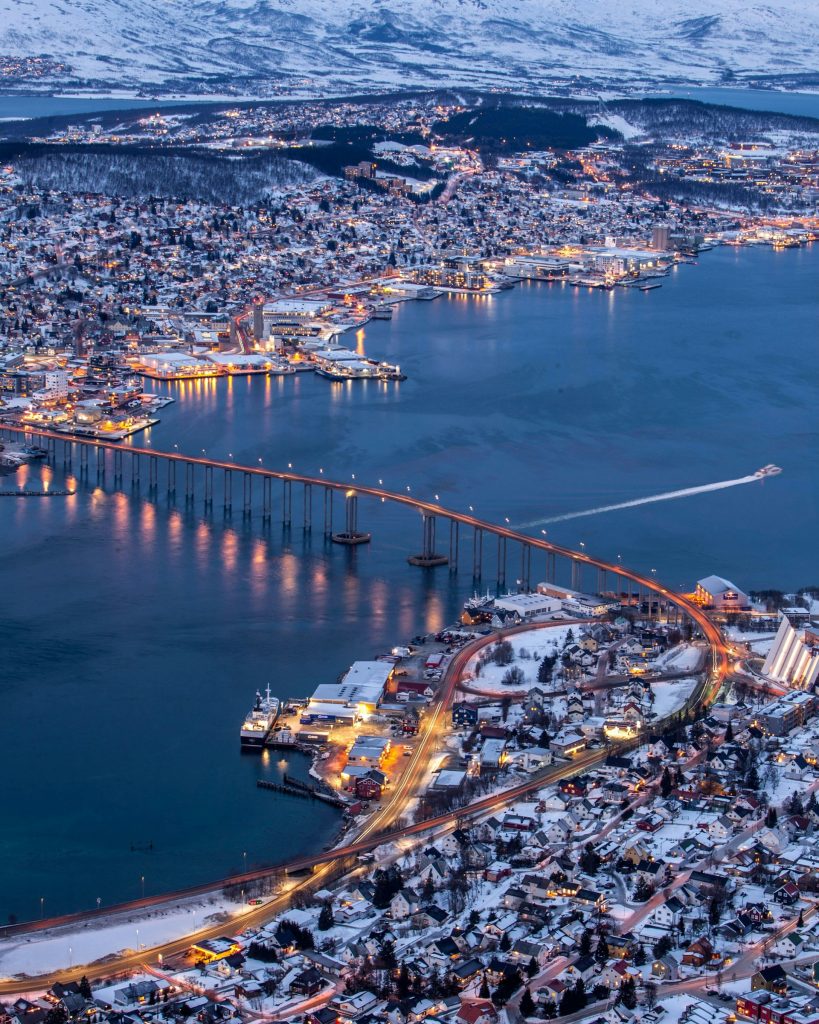
Tromsø: The classic urban polar night. From roughly late November to mid January there is no sunrise, but the city is lively. Cafés are full, and the waterfront glows under streetlights. Mountains catch the blue midday glow and there are frequent northern lights.
Alta and Hammerfest: Smaller towns with a strong local culture. The darkness feels closer to the landscape here. Fishing boats, reindeer grazing, and quiet valleys give you that Arctic village atmosphere.
Svalbard (Longyearbyen): The most dramatic version. The sun is gone for months, and from mid winter you get the “blue hour” stretching all day. This is the place for the longest, deepest polar night experience, with strict polar bear safety rules if you go beyond town limits.
Lofoten and Bodø: No true polar night, but daylight is minimal around the winter solstice. You get low, golden light grazing the mountains for an hour or two on clear days, then a quick fade back to twilight. Photographers adore this.
Narvik and Harstad: Brief polar night or very short days depending on local topography. High mountains can shorten the sun’s reach even when it technically rises, so your experience can be darker than the map suggests.
When The Polar Night Happens
The exact dates slide slightly each year and depend on local horizon and mountains, but the pattern is reliable.
- Tromsø: About late November to mid January
- Alta and Hammerfest: Similar window, often a touch longer in Hammerfest
- Svalbard: Roughly late October to mid February
- Just north of the Arctic Circle: A few days to a couple of weeks of no sunrise, or only a sun that brushes the horizon and hides behind mountains
If you are planning a trip built around the polar night, aim for early December through early January for Tromsø, and November through January for Svalbard for maximum effect. If you want short days without full darkness, late November in Lofoten can be magic.
What Daily Life Looks Like During Mørketid
We do not hibernate. Schools run, buses drive, and people work out, shop, and meet friends. You will notice a few routines:
Light matters. We use warm indoor lighting and candles to make spaces inviting. Many locals use light therapy lamps in the morning to keep energy and mood steady. It is not a cure-all, but it helps.
Vitamin D and sleep. Doctors often recommend vitamin D supplements in winter. Keep a regular sleep schedule and dim screens in the evening. Blackout curtains are less crucial during polar night than during midnight sun, but a calm, cool room still helps you rest.
Outdoor time. Norwegians go outside daily, even for ten minutes. That short midday twilight reset is powerful. A walk on packed snow or a quick ski loop is normal lunch-break behavior.
Bright colors and reflectors. You will see reflective vests and clips on jackets and backpacks. They are not fashion statements. They keep you visible to drivers. Add a reflector to your bag and you fit right in.
The Color Of The Sky: Why It’s Not Just “Black”
Visitors are often surprised that the polar night is not constant darkness. On a clear day, the world shifts through deep blue, violet, and silver, with a low glow behind the mountains that never becomes a sunrise. Snow amplifies the light, and moonlit nights over a snowy fjord can be brighter than many city evenings. When clouds roll in, the light flattens and drops, perfect for slow mornings in a café or a sauna session before dinner.
Northern Lights And The Polar Night
Yes, auroras love the dark. Your chances of seeing northern lights are excellent during the polar night, but there are no guarantees. What helps:
- Time window: From September to March is typical, with December and January nicely positioned.
- Weather: Clear skies beat everything. Many tours will chase gaps in the clouds by driving inland from the coast.
- Eyes up, camera ready: Start looking right after dinner and keep checking. Auroras can flare for five minutes then vanish.
If aurora hunting is your priority, do not fixate on a single town. Base yourself in Tromsø or Alta for tour options that can move. On Svalbard, the aurora can even appear at lunchtime during the darkest weeks, which is a special thrill.
What To Pack For The Dark Season
Think in layers. The air can be calm and cold one day, windy and sleety the next.
- Base layer: Wool or technical fabric. Avoid cotton.
- Mid layer: Fleece or wool sweater.
- Outer layer: Windproof and water resistant shell or insulated parka.
- Feet and hands: Warm socks, waterproof boots with tread, insulated gloves or mittens, thin liner gloves for using your phone.
- Head and neck: Wool hat, buff or scarf.
- Reflectors and a small headlamp: Non-negotiable for walking along roads or in dim areas.
- Camera gear: Extra batteries. The cold drains them faster than you expect.
Getting Around Safely In The Dark
Winter roads in the north are maintained, but conditions shift quickly.
Buses and ferries: Reliable, but expect occasional delays in storms. Always check schedules the day you travel.
Driving: Rent a car only if you are comfortable with ice, snow, and limited visibility. Ask for studded winter tires if legal where you are. Drive slower than you think you need to, leave more space, and brake gently.
Walking: Sidewalks can be icy. Locals sometimes use removable traction cleats. A cheap pair saves a bruised tailbone.
What To Do During Polar Night
You do not visit just to sit in the dark. The season has its own menu.
City comforts: Tromsø’s cafés, microbreweries, and museums thrive in winter. I like warming up at Perspektivet Museum before heading to the harbor for the soft evening light.
Sauna and cold dips: Waterfront saunas are big now. Book a slot, bake in the heat, then walk down a ladder into the sea. It sounds ridiculous. It is glorious.
Skiing and snowshoeing: Even during polar night, floodlit trails let you ski after dinner. A short snowshoe tour during blue hour is beginner friendly and memorable.
Sámi culture and reindeer experiences: In Finnmark and around Tromsø, you can learn about Sámi traditions, try reindeer sledding, and listen to joik singing. Book experiences that are respectful and community-led.
Svalbard activities: Snowmobiling and dog sledding under the starry midday sky are bucket-list material. Follow local safety briefings closely and do not wander outside Longyearbyen without a guide.
Photography Tips For The Dark Season
The polar night is kinder to photographers than you might think.
- Use the blue hour: Late morning to early afternoon is the Arctic blue sweet spot.
- Stabilize: A small tripod or even a bean bag on a railing helps.
- Manual control: Lower shutter speeds, higher ISO, and a wide aperture are your friends.
- Battery management: Keep spares warm in an inner pocket.
- Aurora basics: Turn off flash, manual focus to infinity, 5 to 15 second exposures depending on brightness.
How Locals Cope, And How You Can Too
The darkness is not a problem to fix. It is a season to live with.
Routine anchors mood. Get up at the same time, go outside at midday, plan something small to look forward to in the evening. I keep a weekly dinner with friends on the calendar all winter. It helps.
Chase little pockets of light. Candlelit cafés, a swimming pool under floodlights, a bookstore with warm lamps. The contrast is part of the charm.
Stay curious. Weather poor? Watch for a gap in the clouds and take a short walk. Look at how snow changes the sound of the city. Notice how windows turn into little stages at night.
Be social. Norwegians are not always chatty on the street, but invite people to a board game night or a shared pot of stew and you will see the warmth come out. Winter is when friendships deepen.
Practical Planning For A Polar Night Trip
- Book flexible plans. Storms happen. Build buffer time into your itinerary.
- Choose central accommodations. During polar night, being close to cafés, museums, and pickup points for tours is worth it.
- Prioritize quality outerwear. If you are warm and dry, everything is more enjoyable.
- Think experiences over checklists. The magic of this season is mood and light. Give yourself time to feel it.
Finally, remember this: polar night is not just the absence of the sun. It is a different kind of light, a quiet in the day, and a sky that often rewards patience with green fire at night. If you meet it on its own terms, you will carry it with you long after winter ends.