Lofoten is one of the most beautiful places in Norway, but it is not exactly known as a cheap destination. The islands are famous for dramatic mountains, white sand beaches, fishing villages, northern lights, midnight sun, hiking trails, and red fishermen’s cabins by the sea. Unfortunately, all of this popularity also means that accommodation prices can be high, especially during summer.
The cheapest accommodation in Lofoten is usually found in campsites, hostels, shared cabins, simple guesthouses, and budget-friendly private rooms. Wild camping can also be a good option if you have the right gear and follow the Norwegian right to roam. Prices are usually highest in June, July, and August, while May, September, October, and the winter months often give you much better value.
Finding cheap places to stay in Lofoten takes a bit of planning, but it is absolutely possible. Let’s take a deeper dive into the best budget accommodation options in Lofoten, where to look for cheaper stays, and how to avoid spending your entire travel budget on a bed.
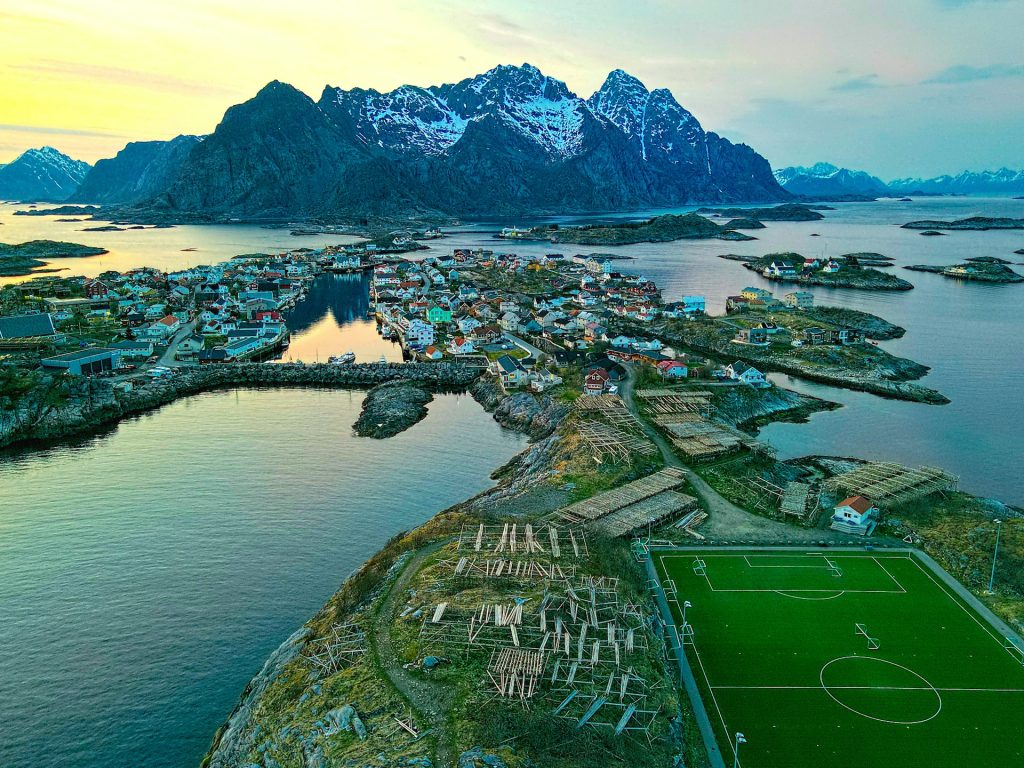
Why Accommodation in Lofoten Is So Expensive
Lofoten has become one of Norway’s most iconic travel destinations, and the number of visitors has increased a lot over the last decade. The islands are fairly small, the villages are compact, and there are not that many large hotels compared to bigger Norwegian cities. This means that demand often exceeds supply during the most popular travel periods.
The most expensive time to visit Lofoten is usually from mid-June to mid-August. This is when you get the midnight sun, warmer weather, long hiking days, and the highest number of international visitors. During these weeks, even simple rooms can become surprisingly expensive.
Winter can also be pricey in certain areas because many travelers come to see the northern lights, go ski touring, or experience the famous Lofoten winter landscape. However, winter prices are usually more varied than summer prices, and it is often easier to find a deal if you are flexible with dates and location.
The biggest rule for finding cheap accommodation in Lofoten is to book early, stay outside the most famous villages, and be flexible with your travel dates.
Hostels in Lofoten Are Usually the Cheapest Indoor Option
Hostels are one of the best choices if you want cheap accommodation in Lofoten without bringing camping equipment. They are especially useful for solo travelers, backpackers, students, and anyone who does not mind shared facilities.
Many hostels in Lofoten offer dorm beds, private rooms, shared kitchens, laundry facilities, and common areas where you can meet other travelers. A shared kitchen is a huge advantage in Norway because eating out is expensive. Even if the room itself is not extremely cheap, being able to cook your own meals can save you a lot of money.
Hostels are often found in or near popular places like Svolvær, Kabelvåg, Leknes, Ballstad, and Å. The cheapest dorm beds tend to sell out quickly in summer, so it is smart to book as soon as your travel dates are fixed.
If you are traveling as a couple, compare the price of two dorm beds with a private room in a guesthouse or campsite cabin. Sometimes the private option is only slightly more expensive, and it gives you much more comfort.
Campsites Are Great for Budget Travelers
Campsites are one of the most practical ways to keep accommodation costs low in Lofoten. Most campsites offer tent pitches, campervan spaces, simple cabins, showers, toilets, shared kitchens, and sometimes laundry rooms. This makes them a good middle ground between wild camping and staying in a hotel.
If you travel with a tent, campsites are usually among the cheapest paid accommodation options in Lofoten. You get access to basic facilities, and you do not need to worry as much about finding a suitable wild camping spot every night.
Simple campsite cabins can also be good value, especially for two or more people traveling together. These cabins are often basic, but they usually provide beds, heating, and sometimes a small kitchenette. You may need to bring your own bed linen or pay extra to rent it.
My personal tip is to always check what is included before booking a campsite cabin. In Norway, it is common for budget cabins to charge extra for bed linen, towels, cleaning, showers, or electricity. These small costs can add up, so the cheapest listed price is not always the real final price.
Wild Camping Can Be Free, but It Requires Respect
Norway’s right to roam makes wild camping possible in many natural areas, including parts of Lofoten. This can be the cheapest way to sleep in Lofoten, but it is not a free pass to camp anywhere.
In general, you can pitch a tent in uncultivated land as long as you keep a reasonable distance from houses and cabins, do not damage nature, and leave no trace. You should avoid camping on farmland, private gardens, protected dunes, parking areas, cemeteries, and places with signs that clearly prohibit camping.
Lofoten has had some pressure from over-tourism in certain areas, especially near famous beaches and trailheads. Because of this, local rules and restrictions may apply in some places. Always check signs, respect local instructions, and never camp where it creates problems for residents, farmers, or other visitors.
Wild camping is best if you have proper equipment for changing weather. Even in summer, Lofoten can be windy, wet, and chilly at night. A cheap tent that works fine in southern Europe can feel very inadequate on a windy beach in northern Norway.
Budget Cabins Are Often Cheaper Than Hotels
Cabins are a classic form of accommodation in Norway, and Lofoten has many of them. Some are luxury waterfront cabins with high prices, but there are also simple cabins that can be affordable if you book early or travel outside peak season.
Budget cabins are especially useful for families, couples, and small groups. If a cabin sleeps four people, the price per person can be much lower than booking hotel rooms. Many cabins also have a kitchen, which helps you save money on food.
The famous red fishermen’s cabins, called rorbuer in Norwegian, are part of the Lofoten experience. Some of them are expensive, especially in places like Reine, Hamnøy, Nusfjord, and Henningsvær. However, you can sometimes find cheaper rorbuer outside the most photographed villages or during shoulder season.
If your main goal is cheap accommodation, do not focus only on the postcard villages. Look at places like Stamsund, Ballstad, Gravdal, Kabelvåg, Laukvik, Ramberg, and areas around Leknes and Svolvær. These places can still be beautiful and practical, but often have better prices than the most famous spots.
Guesthouses and Private Rooms Can Be Good Value
Guesthouses, small inns, and private rooms can be a good option for travelers who want something more comfortable than a hostel but cheaper than a hotel. These places are often family-run and can feel more personal than larger accommodation chains.
Some guesthouses have shared bathrooms and kitchens, which usually makes them cheaper. Others include breakfast, which can be useful if you want a simple start to the day without buying lots of groceries.
Private rooms through booking platforms can also be good value, but the prices vary a lot. Always check the total cost, including cleaning fees and service fees. A room that looks cheap at first can become less attractive once all fees are included.
I recommend looking carefully at the location before booking a cheap private room. Lofoten is long and narrow, and public transport can be limited. A cheap room far away from your planned hikes or activities might cost you more in fuel, bus tickets, or lost time.
Stay in Less Famous Villages To Save Money
Many first-time visitors want to stay in Reine, Hamnøy, Henningsvær, or Svolvær. These places are beautiful, but they are also among the most popular areas. Popularity usually means higher prices.
You can often save money by staying in less famous villages and using them as a base. Leknes, Gravdal, Ballstad, Stamsund, Kabelvåg, Ramberg, Sørvågen, Laukvik, and Vestvågøy in general can be good areas to check.
Staying near Leknes can be practical because it is fairly central in Lofoten. From there, you can reach many beaches, hikes, shops, and villages without driving extremely long distances. Svolvær is also practical if you need transport connections, restaurants, tours, and services, but it can be more expensive in high season.
For the western part of Lofoten, places around Sørvågen and Moskenes can sometimes be cheaper than Reine while still being close to the famous landscapes. For a quieter trip, look north or east of the most crowded areas.
Travel in Shoulder Season for Lower Prices
One of the easiest ways to find cheap accommodation in Lofoten is to avoid the main summer season. May, early June, September, and early October can be excellent months for lower prices.
May often has longer days, improving weather, and fewer visitors. Some hiking trails may still have snow, but the landscapes are beautiful, and accommodation is usually cheaper than in July.
September is one of my favorite months in Lofoten. The summer crowds are smaller, the light is beautiful, autumn colors begin to appear, and prices often drop. You may also have a chance to see the northern lights later in the month if the sky is dark and clear.
Winter can also be affordable if you avoid the most popular northern lights periods and book early. Just remember that winter travel in Lofoten requires more flexibility because weather can affect roads, ferries, flights, and activities.
Use a Kitchen Whenever Possible
When comparing cheap accommodation in Lofoten, do not only look at the nightly price. Food costs matter a lot in Norway. A place with a shared kitchen can be much cheaper overall than a slightly cheaper room with no cooking facilities.
Buying groceries and making your own breakfast, packed lunch, and simple dinner can save a lot of money. Most larger villages have grocery stores, and the best selection is usually found in places like Svolvær, Leknes, and larger local centers.
A very simple budget meal plan could be oatmeal or bread for breakfast, packed sandwiches for lunch, and pasta, rice, soup, or tacos for dinner. This might not sound glamorous, but after a long hike in Lofoten, a warm homemade meal can feel perfect.
When booking budget accommodation, a kitchen is one of the most valuable features you can get.
Consider Campervan Travel, but Calculate the Full Cost
Many people dream about exploring Lofoten by campervan, and it can be a wonderful way to travel. It gives you flexibility, lets you stay close to nature, and can combine transport and accommodation in one cost.
However, campervan travel is not always the cheapest option. Rental prices can be high in summer, fuel is expensive, and you may still need to pay for campsites or designated parking areas. Wild camping rules for tents do not apply in exactly the same way to vehicles, and you cannot just park overnight wherever you want.
A campervan can be good value if you are two or more people, travel outside peak season, and find a reasonable rental price. For solo travelers in July, a hostel and public transport may be cheaper.
Always compare the total cost of a campervan with the total cost of a rental car plus budget accommodation. The result can vary a lot depending on season and availability.
Book Early, but Keep Checking Prices
For summer trips, it is wise to book accommodation many months in advance. Cheap rooms and cabins disappear first, while the most expensive places often remain available longer.
That said, it can still be worth checking prices again closer to your travel dates if your booking has free cancellation. Sometimes new rooms appear, cancellations happen, or prices change. Just be careful not to cancel a decent booking before you have secured a better one.
For winter and shoulder season, you may have more flexibility, but booking early is still smart if you want a specific village, cabin type, or hostel.
If you are traveling without a car, book even earlier. Cheap accommodation near bus routes, ferry terminals, airports, or village centers is more limited than cheap accommodation in remote areas.
Practical Budget Tips for Accommodation in Lofoten
The cheapest Lofoten trip is usually the one where you combine several strategies. Stay in hostels or campsites, use shared kitchens, avoid July if possible, book early, and look outside the most famous villages.
For a very low-budget trip, tent camping is usually the cheapest option. For a comfortable budget trip, simple cabins and guesthouses with kitchens are often the best value. For solo travelers, hostel dorms are hard to beat. For families or groups, cabins can be much cheaper per person than hotels.
Do not forget to check transport when choosing where to stay. Lofoten looks compact on a map, but driving distances can still be longer than expected because roads are narrow, scenic, and often slow. A cheap stay in the wrong location may make your trip less enjoyable.
In my experience, the best budget accommodation in Lofoten is not necessarily the cheapest bed you can find. It is the place that gives you a fair price, a practical location, cooking facilities, and enough comfort to rest properly after long days outside. Lofoten is all about being out in the landscape, and you do not need luxury accommodation to have an unforgettable trip.