Lofoten is one of the most spectacular summer destinations in Norway, with sharp mountain peaks, white sandy beaches, fishing villages, clear blue water, and long summer evenings where the sun barely sets. It is the kind of place that looks almost unreal in photos, but somehow feels even more impressive when you are standing there yourself.
The best things to do in Lofoten in summer include hiking to famous viewpoints like Reinebringen and Ryten, visiting beaches such as Haukland, Uttakleiv, and Kvalvika, exploring fishing villages like Reine and Henningsvær, kayaking under the midnight sun, trying local seafood, visiting museums, and taking scenic road trips between the islands. Summer is also the best season for first-time visitors, since roads are easy to drive, hiking trails are mostly snow-free, and the long daylight gives you much more time to explore.
Lofoten is not a place where you need a packed itinerary every hour of the day. Some of the best moments come from stopping at a viewpoint, walking through a tiny harbor, or sitting by the sea with a coffee while the mountains glow in the evening sun. Let’s take a deeper dive into the best things to do in Lofoten in summer.
Hike To Reinebringen For One Of Lofoten’s Most Famous Views
Reinebringen is probably the most famous hike in Lofoten, and it is easy to understand why. The view from the top looks down over Reine, Hamnøy, Sakrisøy, and the surrounding fjords, with dramatic mountains rising straight from the sea. This is the classic postcard view of Lofoten.
The hike is steep, and even though stone steps have made it safer and easier than it used to be, it is still a demanding climb. You do not need to be an expert hiker, but you should be in decent shape and wear proper shoes. The reward is one of the most impressive viewpoints in all of Norway.
My personal tip is to start early in the morning or later in the evening. In summer, Reinebringen can get very crowded during the middle of the day, especially in July and early August. Since Lofoten has long daylight in summer, you can enjoy the hike outside the busiest hours and still have plenty of light.
Visit Reine, Hamnøy, And Sakrisøy
The small fishing villages around Reine are among the most beautiful places in Lofoten. Red and yellow fishermen’s cabins, known as rorbuer, sit along the water with steep mountains behind them. It is a perfect area for photography, slow walks, and simply enjoying the atmosphere.
Reine is the largest and most practical base in this part of Lofoten, while Hamnøy and Sakrisøy are smaller but extremely scenic. You can easily visit all three in a few hours, but I recommend taking your time. Stop for lunch, walk along the harbor, and look for small local shops selling fish products, crafts, and coffee.
This part of Lofoten is very popular in summer, so book accommodation well in advance if you want to stay in a rorbu. Prices can be high, but waking up by the sea in this landscape is a special experience.
Spend Time On Lofoten’s Beaches
Many first-time visitors are surprised by the beaches in Lofoten. The water can look almost tropical, with turquoise colors and white sand, but do not let the Arctic setting fool you. The sea is cold, even in summer.
Haukland Beach is one of the easiest beaches to visit and one of the most beautiful. It has a wide sandy shore, mountain views, parking, and nearby walking routes. Uttakleiv Beach is just around the corner and has a wilder, more rugged feel. Ramberg Beach is another excellent stop, especially if you are driving through Flakstad.
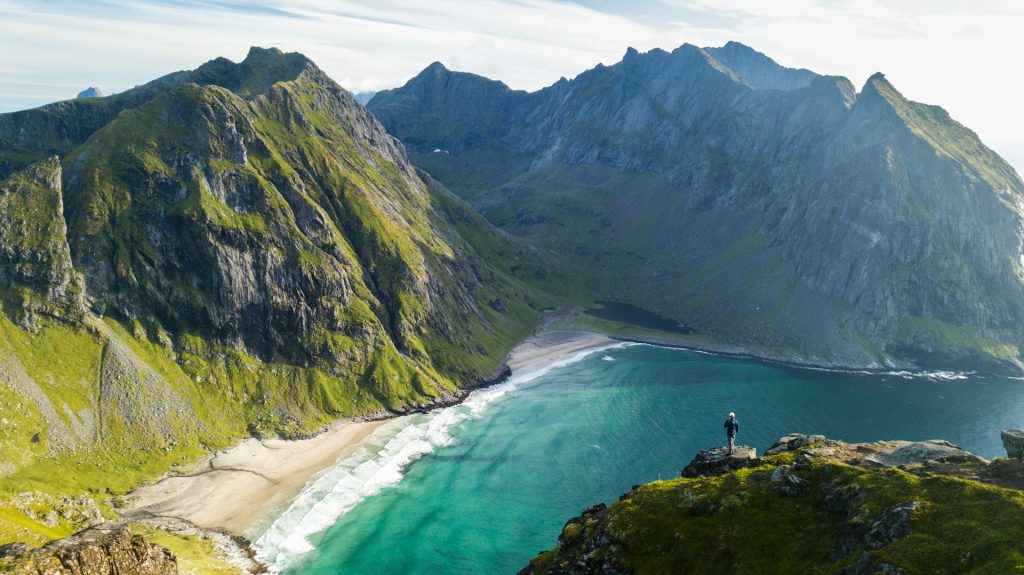
Kvalvika Beach is more remote and requires a hike, which makes it feel more adventurous. Surrounded by steep mountains and facing the open sea, it is one of the most memorable beaches in Lofoten. Many visitors combine it with the Ryten hike, which gives you a fantastic view down toward the beach.
Hike Ryten And Look Down On Kvalvika Beach
Ryten is one of the best summer hikes in Lofoten because it gives you a huge scenic payoff without being as intimidating as some of the more technical mountain routes. From the top, you get a dramatic view over Kvalvika Beach, the surrounding mountains, and the open Atlantic Ocean.
This hike is popular, but it feels more open and spacious than Reinebringen. It is still important to bring good footwear, water, snacks, and layers of clothing. Weather in Lofoten can change quickly, even on a day that starts with sunshine.
If you want the full experience, start early and include a detour down to Kvalvika Beach. It makes the trip longer, but it is one of the best combinations of hiking and beach scenery in Northern Norway.
Explore Henningsvær
Henningsvær is one of the most charming fishing villages in Lofoten, spread across small islands connected by bridges. It has galleries, cafés, restaurants, small shops, harbor views, and a lively summer atmosphere.
The village is also famous for its football field, which sits dramatically among rocks and sea. You cannot always access the field itself, but you can see the area from nearby viewpoints and drone photos have made it one of the most recognizable places in Lofoten.
Henningsvær is a great place to spend half a day. Walk around the harbor, visit a gallery, have lunch, and enjoy the mix of old fishing culture and modern coastal creativity. It is touristy in summer, but still has a real local identity.
Go Kayaking Under The Midnight Sun
Kayaking is one of the best ways to experience Lofoten from a different perspective. From the water, the mountains feel even taller, the fishing villages look more peaceful, and the clear sea gives you a strong sense of being close to nature.
In summer, guided kayak tours are available in several places, including around Reine, Svolvær, Henningsvær, and Eggum. A midnight sun kayaking trip is especially memorable if the weather cooperates. Paddling in calm water late in the evening while the sun hovers near the horizon is one of those experiences that stays with you for years.
I recommend choosing a guided tour unless you already have good kayaking experience. The sea around Lofoten can be cold and conditions can change quickly, so local knowledge matters.
Take A Scenic Road Trip Through The Islands
One of the easiest and most rewarding things to do in Lofoten in summer is simply to drive. The roads connect mountains, beaches, fishing villages, bridges, and viewpoints, and there are beautiful stops everywhere.
The stretch between Svolvær and Å is the classic Lofoten road trip route. Along the way, you can stop in Henningsvær, Leknes, Haukland, Uttakleiv, Nusfjord, Ramberg, Reine, and Å. The distances are not huge, but driving takes longer than expected because you will want to stop often.
Do not rush Lofoten. A route that looks like it should take two hours can easily become a full-day trip once you include walks, photos, food stops, and small detours. That is part of the charm.
Visit Nusfjord, One Of Norway’s Best Preserved Fishing Villages
Nusfjord is a historic fishing village that gives you a good look at Lofoten’s coastal heritage. It is smaller and quieter than many other famous stops, but it has beautifully preserved buildings, old docks, traditional rorbuer, and a very photogenic harbor.
There is usually an entrance fee to visit the preserved village area, but it is worth it if you are interested in history, architecture, and traditional life in Northern Norway. Nusfjord also has places to eat and stay, making it a nice slower stop between Leknes and Reine.
Try Local Seafood
Lofoten has been shaped by fishing for centuries, and seafood is a big part of the travel experience. Stockfish, which is dried cod, is one of the region’s most important traditional products. You will see wooden racks used for drying fish in many villages, although the main drying season is earlier in the year.
In summer, look for fresh cod, halibut, shrimp, fish soup, and local seafood dishes in restaurants. Many places also serve modern Nordic food using local ingredients. Eating seafood in a small fishing village with views of the mountains and harbor is one of the simplest but best things to do in Lofoten.
Visit The Lofotr Viking Museum
If you want a break from hiking and beaches, the Lofotr Viking Museum at Borg is a great cultural stop. The museum is built around a reconstructed Viking longhouse and gives visitors a good introduction to Viking Age life in Northern Norway.
This is especially good for families, but adults will enjoy it too. In summer, there are often extra activities, demonstrations, and outdoor experiences. It is a useful reminder that Lofoten is not only beautiful nature, but also a region with deep history.
Go On A Sea Eagle Safari Or Boat Trip
Boat trips are popular in Lofoten during summer, especially from Svolvær. One of the classic trips goes to Trollfjord, a narrow and dramatic fjord surrounded by steep mountains. Many tours also give you a chance to see the white-tailed eagle (Haliaeetus albicilla), which is common in this part of Norway.
A RIB safari is faster and more exciting, while larger boat tours are usually more comfortable and better suited for families or travelers who prefer a calmer experience. Either way, seeing Lofoten from the sea gives you a better understanding of how closely life here is connected to the ocean.
Try Surfing At Unstad
Unstad is one of the most famous surf spots in Norway, and it has become a must-visit place for travelers who want something a little different. Surfing in the Arctic might sound strange, but Lofoten has a real surf culture, and summer is a good time for beginners to try it.
The water is cold, so you will need a wetsuit, but local surf schools and rental places can help with equipment and lessons. Even if you do not surf, Unstad is worth visiting for the scenery. The beach sits between mountains and open sea, giving it a wild and powerful atmosphere.
Walk Around Å, The Village At The End Of The Road
Å is the last village on the main road through Lofoten, and it is a natural final stop for many road trips. The name is short, but the village has a lot of character, with old wooden buildings, fishing history, museums, and beautiful coastal views.
It is a good place to learn about traditional fishing life, visit small museums, and enjoy the feeling of reaching the end of the road. From Å, you can also continue by ferry to places like Værøy or Bodø, depending on your travel plans.
Practical Tips For Visiting Lofoten In Summer
Summer is the busiest season in Lofoten, so planning ahead is important. Accommodation, rental cars, guided tours, and popular restaurants can fill up quickly, especially from late June to early August. If you want flexibility, travel in early June or late August, when it is still beautiful but usually a bit less crowded.
Bring layered clothing, even in summer. You might get sunshine, wind, rain, fog, and chilly evenings all in the same day. A waterproof jacket, good walking shoes, warm layers, and a small daypack are essential.
Also remember that Lofoten is a living region, not just a tourist attraction. Park only in marked areas, respect private property, avoid blocking narrow roads, and use toilets and waste facilities properly. The nature here is fragile, and responsible travel makes a big difference.
Summer in Lofoten is about more than ticking off famous viewpoints. It is about long days, shifting weather, quiet beaches, fishing villages, mountain hikes, and the feeling of being far north while still surrounded by warmth, culture, and life. Whether you come for hiking, photography, food, kayaking, or slow coastal travel, Lofoten in summer is one of the most rewarding places to visit in Norway.