Lofoten is one of the best hiking destinations in Norway, with sharp mountains rising straight from the sea, white sandy beaches, fishing villages, turquoise water, and dramatic viewpoints that feel almost unreal. The islands are not especially high compared to many other mountain areas in Norway, but the hikes often feel steep, exposed, and surprisingly demanding because the terrain rises so quickly from sea level.
The best hikes in Lofoten include Reinebringen, Ryten and Kvalvika Beach, Offersøykammen, Festvågtind, Djevelporten and Fløya, Håen on Værøy, Bunes Beach, and Mannen near Haukland Beach. These hikes offer the classic Lofoten mix of mountain views, beaches, fjords, and fishing village scenery. Some are short and steep, while others are longer day hikes that require more planning.
I have hiked in Lofoten in both sunny summer weather and the kind of sideways rain that makes you question every life decision, and the biggest lesson is simple: choose your hike based on the weather, not just your bucket list. Let’s take a deeper dive into the best hikes in Lofoten, with practical tips for choosing the right trail for your trip.
Reinebringen
Reinebringen is probably the most famous hike in Lofoten, and for good reason. The view from the top looks down over Reine, Hamnøy, Sakrisøy, and the deep blue Reinefjorden, with jagged mountains rising in every direction. It is the kind of view that has become almost symbolic of Lofoten.
The hike is short, but it is not easy. Reinebringen is steep from the beginning, and much of the route follows stone steps built into the mountainside. These steps have made the trail safer and more durable than it used to be, but they have not made it effortless. Expect burning legs, especially if you are not used to steep ascents.
Reinebringen is best for travelers who want the classic Lofoten viewpoint and do not mind crowds. During the main summer season, this is one of the busiest hikes in Northern Norway. My personal tip is to go early in the morning or later in the evening, especially during the midnight sun season when daylight lasts far into the night.
Do not hike Reinebringen in bad weather, strong wind, or icy conditions unless you have proper mountain experience. The upper part can feel exposed, and the stone steps can become slippery when wet.
Ryten And Kvalvika Beach
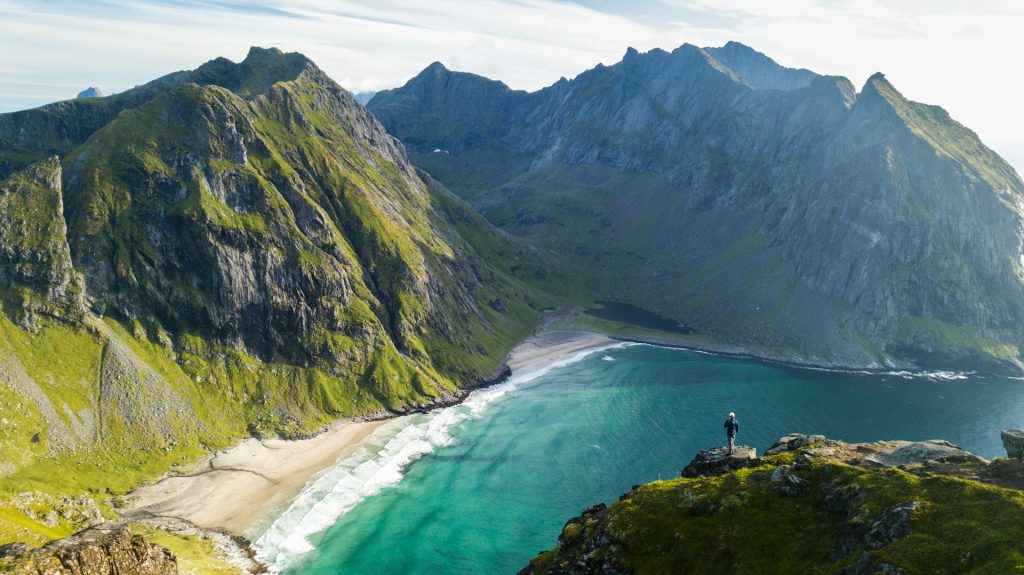
Ryten and Kvalvika Beach together make one of the best hikes in Lofoten if you want both a mountain summit and a wild beach in the same trip. Kvalvika is a remote beach surrounded by steep green and black mountains, while Ryten gives you the famous view down toward the beach from above.
Many hikers go straight to Ryten, take the classic photo near the cliff edge, and then return the same way. Others combine Ryten with a descent to Kvalvika Beach, which makes the day longer but much more rewarding. The terrain is varied, with muddy sections, rocky paths, open slopes, and wide views toward the sea.
This hike is easier than Reinebringen in terms of steepness, but it is longer and can be wet underfoot. Good hiking shoes make a big difference here. The area around Fredvang can also be windy, so bring an extra layer even on warm days.
Ryten and Kvalvika are best for first-time visitors who want a full Lofoten hiking experience. You get mountains, beach, ocean, cliffs, and that remote Arctic feeling without needing to commit to a very difficult expedition.
Offersøykammen
Offersøykammen is one of the best short hikes in Lofoten. It is located near Leknes, which makes it easy to reach if you are staying in the central part of the islands. The hike is relatively short, but it gives a huge reward for the effort.
From the summit, you get panoramic views over Vestvågøy, the surrounding sea, small islands, and curved beaches. On a clear evening, this is a fantastic place to watch the sun dip low over the ocean. It is also a good choice if you have limited time or if the weather window is short.
The trail is steep in places, but it is manageable for most people with average fitness. Compared to the more famous hikes around Reine and Fredvang, Offersøykammen often feels a little less overwhelming. It can still be busy in summer, but it usually does not have the same pressure as Reinebringen.
I often recommend Offersøykammen to visitors who want a beautiful Lofoten viewpoint without spending an entire day hiking. It is a great “arrival day” hike if you have just driven into Lofoten and want to stretch your legs.
Festvågtind
Festvågtind is the classic hike near Henningsvær, one of Lofoten’s most charming fishing villages. The hike is steep, rough, and more demanding than it may look on paper, but the view from the top is superb.
From Festvågtind, you look down over Henningsvær, the surrounding islands, bridges, fishing harbor, and open sea. On clear days, the village looks like it is floating in the ocean. This hike is especially popular with photographers because the view captures the relationship between Lofoten’s human settlements and its wild coastal landscape.
The trail can be muddy and rocky, and some sections require careful footing. It is not a polished stairway like parts of Reinebringen. This is a proper Lofoten trail, which means it can feel rugged even though the hike is not very long.
Festvågtind is best for hikers who are comfortable with steep terrain and want a rewarding summit close to one of Lofoten’s most popular villages. After the hike, you can head into Henningsvær for coffee, food, or a walk around the harbor.
Djevelporten And Fløya
Djevelporten and Fløya are among the best hikes near Svolvær, the largest town in Lofoten. This trail is a great choice if you are staying in eastern Lofoten or arriving by ferry, plane, or Hurtigruten.
Djevelporten, meaning “the Devil’s Gate,” is a famous rock formation wedged between two cliffs. Many hikers stop here for photos before continuing toward Fløya, which gives a spectacular view over Svolvær, the harbor, nearby islands, and the surrounding mountains.
This hike is steep and can feel airy in places. Parts of the route have Sherpa-built steps, but you should still expect mountain terrain, especially higher up. The full hike to Fløya is more demanding than simply reaching the lower viewpoints, so choose how far to go based on your comfort level and the weather.
The great thing about this hike is how close it is to town. You can start near Svolvær and quickly find yourself above the rooftops with a wide coastal panorama. It is one of the best hikes in Lofoten for people who do not want to drive far to reach a trailhead.
Mannen From Haukland Beach
Mannen is a wonderful hike near Haukland Beach and Uttakleiv, two of the most beautiful beaches in Lofoten. This is a moderate hike with an outstanding view over white sand, turquoise water, green hills, and the open sea.
The trail starts near Haukland and climbs steadily to the ridge. It is not as brutally steep as Reinebringen or Festvågtind, but it still gives that classic Lofoten feeling of gaining elevation quickly. The view over Haukland Beach is beautiful almost the entire way, which makes the hike enjoyable even before you reach the top.
Mannen is a great choice if you want to combine hiking with beach time. You can hike in the morning, then spend the afternoon walking on Haukland or continuing around to Uttakleiv. Even if the water looks tropical, remember that this is Arctic Norway. Swimming is possible, but it is usually very cold.
This hike is best for travelers who want a scenic, moderate hike without committing to a long and remote route. It is also a strong option for families with older children who are used to hiking.
Bunes Beach
Bunes Beach is one of the most memorable hikes in Lofoten because getting there feels like a small adventure. You first take the ferry from Reine to Vindstad, then walk through a quiet valley before crossing over to the beach.
The hike itself is not very difficult compared to Lofoten’s steep mountain trails. The reward is a huge, wild beach backed by towering cliffs and open ocean. Bunes feels more remote than many other popular places in Lofoten, partly because it is not accessible by car.
This is one of the best hikes in Lofoten for people who want atmosphere rather than altitude. You do not need to climb a high summit to feel the drama of the landscape here. The beach, cliffs, and isolation do most of the work.
The most important thing is to check ferry times carefully. You need to plan your return so you do not miss the last boat back to Reine. In summer, this is a popular trip, so arrive early and be prepared for changing weather.
Håen On Værøy
Håen on Værøy is a little outside the main Lofoten road trip route, but it deserves a place among the best hikes in Lofoten. Værøy is one of the outer islands, reached by ferry, and it has a wilder, quieter feeling than many of the more visited areas.
The hike to Håen gives an unforgettable view over Måstad, steep bird cliffs, the ocean, and the old cultural landscape of the island. On a clear day, the scenery is enormous. It feels open, raw, and very far from everyday life.
Håen is not the most convenient hike if you are only in Lofoten for two or three days, but it is an excellent choice if you have more time and want to experience a different side of the archipelago. Værøy has a slower pace, fewer crowds, and a strong sense of coastal history.
Weather matters a lot here. The outer islands can be windy, foggy, and exposed. If the forecast is good, however, Håen can easily become one of the highlights of your entire Lofoten trip.
Munken And Munkebu
Munken and Munkebu are excellent choices for hikers who want something longer and more demanding than the classic short viewpoint hikes. This route starts near Sørvågen and leads into a dramatic mountain landscape of lakes, ridges, and views over western Lofoten.
Many people hike to Munkebu hut, while stronger hikers continue toward Munken for even better views. This is a more serious day hike than Reinebringen or Offersøykammen. The terrain is varied and can be wet, rocky, and tiring, but the scenery is fantastic.
Munken is a good alternative if you are staying near Reine or Sørvågen and want to avoid the heaviest crowds. It does not have one single famous Instagram viewpoint in the same way as Reinebringen, but the overall hiking experience is richer and more peaceful.
Bring enough food, water, and clothing for a full day outside. This is not the hike to start late in questionable weather unless you know exactly what you are doing.
When Is The Best Time To Hike In Lofoten?
The main hiking season in Lofoten is usually from late May or June to September. July and August are the most popular months, with the warmest weather, long daylight hours, and the easiest access to trails. They are also the busiest months.
June is beautiful because of the midnight sun, and the mountains often still have patches of snow that make the scenery even more dramatic. September can be excellent for hiking, with autumn colors, fewer people, and softer light, but the weather becomes more unstable.
Winter hiking in Lofoten is a completely different activity. Snow, ice, avalanche risk, darkness, and fast-changing weather make many summer hiking routes unsafe for casual visitors. If you visit in winter, choose lowland walks unless you have proper winter mountain experience, equipment, and local knowledge.
Never assume a hike is safe just because it is short. In Lofoten, short hikes can be extremely steep and exposed.
Practical Tips For Hiking In Lofoten
Good hiking shoes are essential in Lofoten. Many trails are muddy, rocky, slippery, or steep. Even on short hikes, sneakers can be a poor choice after rain. I also recommend bringing a windproof jacket, warm layer, water, snacks, and a fully charged phone.
Weather changes quickly in Lofoten. A sunny morning can turn into fog and rain by afternoon. Always check the forecast, but also look at the sky and use common sense. If the clouds are low and the wind is strong, choose a beach walk or a lower hike instead of forcing a summit.
Parking is another practical issue. Popular trailheads can fill up fast in summer, and some areas have paid parking or local restrictions. Always park legally and avoid blocking roads, farm access, or private driveways. Lofoten receives many visitors, and responsible parking makes a real difference for local communities.
Stay on established trails whenever possible. Lofoten’s vegetation is fragile, and repeated foot traffic damages the thin soil quickly. This is especially important around popular places like Reinebringen, Ryten, Kvalvika, and Haukland.
Which Lofoten Hike Should You Choose?
Choose Reinebringen if you want the most iconic view. Choose Ryten and Kvalvika if you want the best all-round Lofoten hiking experience. Choose Offersøykammen if you want a short hike with a big reward. Choose Festvågtind if you are staying near Henningsvær and want a steep local classic. Choose Djevelporten and Fløya if you are based in Svolvær. Choose Mannen if you want a beautiful beach and mountain combination without making the day too demanding.
For a quieter and more adventurous experience, look toward Bunes Beach, Munken, or Håen on Værøy. These hikes take more planning, but they also show you why Lofoten is more than just a collection of famous viewpoints.
The best hike in Lofoten is not always the most famous one. It is the hike that matches your fitness, the weather, your available time, and the kind of experience you want. Some days that means climbing a steep mountain above Reine. Other days it means walking slowly toward a wild beach with rain in the air and sea eagles circling above the cliffs. In Lofoten, both can feel unforgettable.