Svalbard is one of those rare places where the Arctic still feels vast and untamed. The archipelago sits far north in the Barents Sea, wrapped in glaciers and cold seas, and its wildlife has adapted to short summers, long polar nights, and shifting sea ice. Even a few hours outside Longyearbyen can remind you that this is the realm of polar bears, walrus, whales, and hardy land mammals like the Svalbard reindeer and Arctic fox.
If you are wondering what wildlife you can realistically expect to see on Svalbard, here’s the short answer: summer is prime time for birds, whales, and walrus; reindeer and foxes are possible year-round near settlements; and polar bear sightings are possible, but never guaranteed and should never be pursued. The best encounters come with patience, local knowledge, and respect for distance and safety rules.
Let’s take a deeper dive into the world of wildlife on Svalbard.
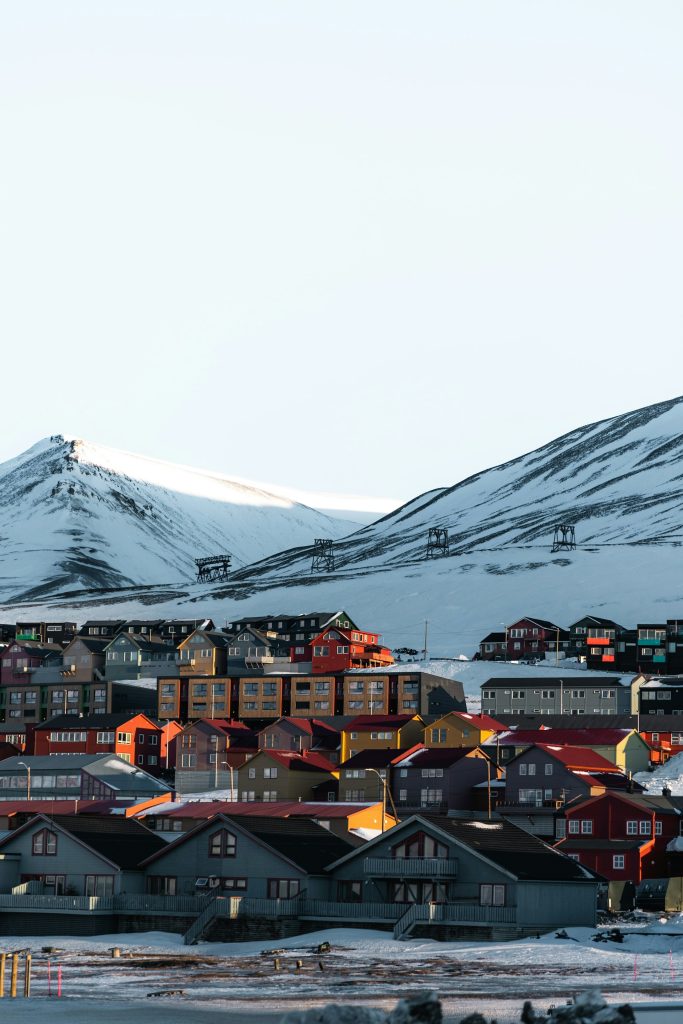
Where and When to See Svalbard Wildlife
Season matters. From May to August, sea ice retreats and life explodes along the coasts. This is when boat-based trips can reach bird cliffs and walrus haul-outs, and when plankton blooms draw fish and, in turn, whales. The shoulder months of April, May, and early September can be excellent for ice-edge excursions where marine mammals hunt. In winter and early spring, daylight is limited or absent, which makes viewing tougher, but Arctic foxes and reindeer are still around, and the landscapes can be unforgettable if you’re prepared for the cold.
Local geography also shapes encounters. Inner fjords like Isfjorden around Longyearbyen are accessible and often a first taste of Svalbard’s wildlife. Poolepynten on Prins Karls Forland is well known for walrus. The towering bird cliffs of Alkefjellet in Hinlopen Strait host tens of thousands of Brünnich’s guillemots in summer. Glacial fronts in places like Krossfjorden can attract feeding kittiwakes and sometimes whales, especially when meltwater concentrates nutrients.
Polar Bears: Icon of the Arctic
Svalbard lies within the range of the Barents Sea polar bear population. Bears are primarily marine mammals that hunt seals on sea ice, and their presence on land is opportunistic. Sightings vary from year to year depending on ice and food. You might see tracks on a beach, a distant bear on drift ice, or, rarely, a bear near settlements.
Two golden rules define polar bear etiquette on Svalbard: do not seek bears and keep a generous distance. The safest, most respectful encounters typically happen from a ship with an experienced crew who knows how to position at range without stress to the animal. On land, traveling with a certified guide is the norm, and for good reason. Guides manage safety, choose routes with visibility, and know when to back off. My simple advice: if you are close enough to affect a bear’s behavior, you are too close.
Svalbard Reindeer: Small, Stocky, and Surprisingly Unbothered
The Svalbard reindeer is a distinct, smaller-bodied subspecies, with short legs and a very round build that conserves heat efficiently. They graze on mosses, lichens, and hardy grasses, and you can often see them in and around Longyearbyen and Adventdalen. What surprises most visitors is how relaxed many reindeer appear. They often trot past people without fuss. Even so, give them space and let them decide the distance. They do just fine without handouts or coaxing.
A personal tip: morning and late evening are lovely times to watch reindeer quietly feeding without the daytime bustle. In early summer, the green flush on south-facing slopes can bring multiple animals into a single view.
Arctic Fox: The Opportunist in Two Coats
Svalbard’s Arctic fox comes in two color morphs: white and blue. The white morph turns brilliant white in winter and mottled brown and white in summer; the blue morph keeps a darker bluish-brown tint year-round. Foxes are resourceful scavengers and hunters, following bird colonies in summer for eggs and chicks, and shadowing polar bears for scraps when they can. Around Longyearbyen, you may see foxes near the shoreline or skirting human activity, but never feed them; habituation is bad news for the animals.
If you’re a patient watcher, keep an eye on kittiwake and guillemot colonies. Foxes can appear along the talus below the cliffs, and a pair provisioning a den is a masterclass in stealth.
Walrus and Seals: Lords of the Haul-Outs
Walrus are a Svalbard favorite: massive, whiskered animals that rest in groups on low beaches and skerries. The best way to see them is on a boat trip to a known haul-out, where captains know the approach angles that minimize disturbance. Watch for mutual grooming and the way they use those long tusks for climbing and asserting space.
As for seals, the ringed seal is key prey for polar bears and often spotted near ice edges or breathing holes. Bearded seals with their square foreflippers sometimes loaf on ice floes, their long whiskers framing a dignified face. Farther out, harp and hooded seals may be encountered, though sightings depend on sea conditions.
A handy note for photographers: walrus skins are subtly patterned, and their whiskers, called vibrissae, record a lot of character. A long lens and a calm approach make a world of difference.
Whales and Dolphins: Following the Food
Summer brings minke whales into the fjords and humpbacks to productive feeding areas where herring and capelin concentrate. With luck, you might also see fin whales powering across open water, and occasionally blue whales in deeper channels. Belugas often travel in family groups; a quiet, patient captain can put you in position to hear their exhalations roll across still water.
Whales are wild and mobile, so think in terms of probabilities, not promises. When conditions line up, you can have multiple species in a day. When they don’t, you learn to love birds and ice for an afternoon and the whales turn up tomorrow.
Birdlife: From Tiny Auks to Arctic Terns
Svalbard’s birdlife is a summer spectacle. The most abundant is the little auk (dovekie), which nests by the hundreds of thousands in boulder fields and whirls over the coastline like drifting smoke. Their guano fertilizes the tundra below, turning otherwise harsh slopes into green, flower-dotted oases.
On the cliffs, Brünnich’s guillemots pack into narrow ledges, while black-legged kittiwakes create noisy clouds at glacial fronts where meltwater churns up food. Northern fulmars glide effortlessly along ridges, Arctic terns defend their nests with fearless dives, and barnacle and pink-footed geese graze the valleys. You can see puffins, but not in the dense colonies of places like coastal Norway; on Svalbard they are present in smaller numbers.
A special local resident is the Svalbard rock ptarmigan, which stays year-round and changes its plumage from mottled summer browns to winter white. Spotting one on a snowfield feels like a small triumph.
A Simple Food Web in a Harsh Place
Svalbard’s web of life rests on cold, productive seas. Phytoplankton blooms kick off the season, feeding zooplankton like copepods that sustain fish such as capelin and polar cod. From there, energy flows to birds, seals, whales, and ultimately polar bears. On land, nutrient hotspots below bird colonies support tundra plants that feed reindeer and geese, which in turn support foxes and opportunistic gulls. There are no native amphibians or reptiles this far north, and terrestrial predators are limited, which is why foxes and glaucous gulls play outsized roles.
Responsible Wildlife Watching on Svalbard
Svalbard’s rules are strict for good reasons. The overarching idea is simple: do not disturb, do not pursue, and leave no trace. A few practical habits go a long way:
- Keep well back from all wildlife. If an animal changes posture, vocalizes, or focuses on you, you’re too close.
- Use binoculars and a long lens instead of walking closer. You’ll see more natural behavior and avoid stress to the animal.
- Choose experienced guides and operators. In Svalbard, safety includes polar bear awareness, smart route choices, and knowledge of protected sites.
- Drones are heavily regulated and quickly become a disturbance. If you don’t have explicit permission under current rules, leave the drone in its case.
- Cultural remains are protected. Old trapper huts, bones, and artifacts are part of Svalbard’s story. Enjoy with your eyes and camera, not your hands.
A simple yardstick: if your presence changes the scene, you’re too close or staying too long.
Suggested Itineraries and Spots for Wildlife Encounters
If your time is short, a day boat in Isfjorden can deliver reindeer, fox, kittiwakes, guillemots, and potentially minke whales. With three to five days, add a walrus haul-out such as Poolepynten and a glacier front where birds feed on upwelling currents. If you have a week or more, consider a small ship that explores Hinlopen Strait and the northwestern fjords; this boosts your chances for walrus, multiple whale species, big bird cliffs like Alkefjellet, and, with luck, distant polar bears on drift ice.
My personal pattern is to mix land-based walks for reindeer and fox with boat days for walrus, birds, and whales. That balance usually yields a wider range of species without rushing.
Practical Tips for Photographers and Nature Lovers
Bring binoculars as essential kit; spotting scope if you enjoy scanning. For cameras, a telephoto in the 300–600 mm range is very useful on boats. On land, a versatile 70–200 mm covers reindeer and fox nicely, while a wider lens captures scale at glaciers and bird cliffs. Pack dry bags for camera gear, extra batteries (the cold drains them), and lens cloths for sea spray.
Clothing matters more than you think. Even in August, it can feel raw after hours on deck. Wear warm base layers, a windproof and waterproof shell, a hat that stays on in gusts, and gloves you can operate a camera with. Footwear with good grip makes slippery decks and rocky beaches less of a worry.
Finally, manage expectations. Svalbard will hand you quiet days and dazzling ones. The people who see the most are the ones who accept the rhythm: scan the horizons, enjoy the stillness, and be ready when the moment arrives. When it does, it’s usually better than what you pictured.