Choosing where to stay in Oslo can make a big difference to your trip, especially if you are visiting the city for the first time. Oslo is not a huge capital, but the main attractions are spread between the city center, the waterfront, Frogner, Bygdøy, Grünerløkka, and the hills around Holmenkollen. Staying in the right area will save you time, reduce transport stress, and make sightseeing much easier.
The best areas to stay in Oslo for sightseeing are the city center, Bjørvika, Nationaltheatret, Aker Brygge, Tjuvholmen, and Grünerløkka. For most first-time visitors, the city center or Bjørvika will be the most practical choice. If you want waterfront views, choose Aker Brygge or Tjuvholmen. If you want cafés, restaurants, and a more local neighborhood feeling, Grünerløkka is a great option.
This guide will help you choose the best Oslo neighborhood for your trip, with practical advice on sightseeing, transport, hotels, atmosphere, and how close each area is to the city’s main attractions.
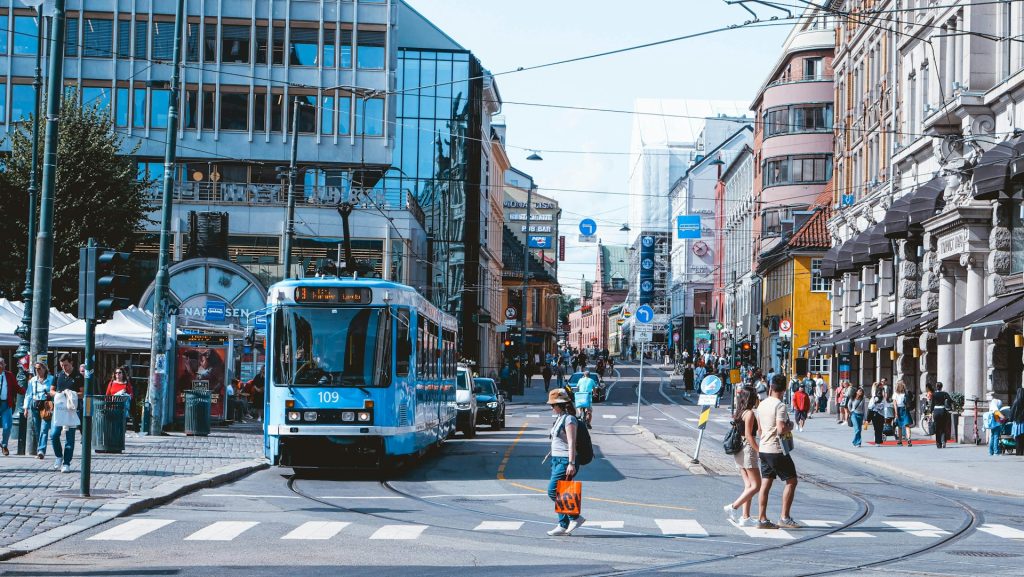
Oslo City Center: Best Overall Area For First-Time Visitors
The Oslo city center is the most practical place to stay if sightseeing is your main priority. This area includes Oslo Central Station, Karl Johans gate, Jernbanetorget, Stortinget, and many of the streets around the main shopping and transport core.
The biggest advantage of staying in the city center is convenience. You are close to Oslo Central Station, which is where many visitors arrive by airport train, regional train, or bus. From here, you can walk to the Oslo Opera House, Karl Johans gate, the Parliament building, the Royal Palace, Akershus Fortress, City Hall, and the waterfront.
If this is your first time in Oslo and you only have one or two days, the city center is hard to beat. You can start sightseeing immediately after breakfast, return to your hotel during the day if you need a break, and easily find restaurants, shops, cafés, and public transport.
The city center is also a good base if you want to use the Oslo hop-on hop-off bus. Several sightseeing routes and tourist services are focused around central areas, which makes it easier to join tours or move between major attractions.
The downside is that some parts of the city center feel more practical than charming. Around Oslo Central Station, the atmosphere is busy and urban rather than cozy. It is safe and convenient, but not always the most beautiful part of the city.
Still, for pure sightseeing efficiency, the city center is one of the best places to stay in Oslo.
Bjørvika: Best Area For Modern Oslo And The Opera House
Bjørvika is one of the best areas to stay in Oslo if you want a modern waterfront base close to some of the city’s most famous new attractions. This is the area around the Oslo Opera House, MUNCH, the Deichman Bjørvika library, the Barcode district, and the eastern waterfront promenade.
I especially recommend Bjørvika for first-time visitors who like architecture, fjord views, and easy access to central transport. You can walk to the Opera House in minutes, enjoy the waterfront in the morning, and still be close to Oslo Central Station.
This area gives you a strong sense of modern Oslo. The Opera House roof, the tall Barcode buildings, MUNCH, new restaurants, waterfront paths, and public spaces make Bjørvika feel fresh and urban. It is very different from older European city centers, and that is part of what makes it interesting.
Bjørvika is also practical for sightseeing. You can walk west along the waterfront toward Akershus Fortress and Aker Brygge, or walk inland toward Karl Johans gate and the main city center. Public transport connections are excellent because Oslo Central Station is nearby.
The main drawback is that Bjørvika can feel polished and modern rather than traditional. If you are looking for old wooden houses, cozy side streets, and historic charm, this is not the right area. But if you want convenience, architecture, and a waterfront atmosphere, Bjørvika is excellent.
Nationaltheatret: Best Central Area For A Balanced Stay
Nationaltheatret is one of the best areas to stay in Oslo if you want a central location without being right next to the busiest station area. It sits between Karl Johans gate, the Royal Palace, Aker Brygge, City Hall, and the National Theatre.
This area is very convenient for sightseeing. You can walk to the Royal Palace, Karl Johans gate, Aker Brygge, Tjuvholmen, City Hall, the National Museum, and the harbor. You also have excellent public transport connections, including trains, metro, trams, and buses.
Nationaltheatret feels a little more elegant and calm than the streets around Oslo Central Station. It is still central, but the atmosphere is often more comfortable for visitors who want to be near everything without staying in the busiest transport hub.
This is also a good area if you are planning to explore Oslo on foot. You can walk east toward Karl Johans gate and the city center, south toward Aker Brygge and the fjord, or west toward the Royal Palace and Frogner.
For many travelers, Nationaltheatret is the best compromise in Oslo. It is central, attractive, well connected, and close to both city sights and waterfront areas.
The downside is that hotels in this area can be expensive, especially in high season or during conferences. But if the price fits your budget, it is one of the most comfortable bases for sightseeing.
Aker Brygge: Best Area For Waterfront Restaurants And Fjord Views
Aker Brygge is one of the most popular waterfront areas in Oslo. It is known for restaurants, bars, shops, harbor views, and a lively atmosphere in good weather. If you want to stay somewhere scenic and close to the fjord, Aker Brygge is a strong choice.
This area is especially good for visitors who want evenings by the water. After a day of sightseeing, you can return to your hotel, walk along the promenade, have dinner outside, and enjoy the harbor without needing extra transport.
Aker Brygge is also close to several attractions. You can walk to City Hall, the National Museum, Akershus Fortress, Tjuvholmen, the ferry piers, Karl Johans gate, and the National Theatre area. It is not directly beside Oslo Central Station, but it is still very central.
This is a good area for couples, older travelers, and anyone who wants a comfortable city break with nice restaurants and easy fjord access. It also works well for visitors who prefer scenic surroundings over the practical feeling of the train station area.
The main downside is price. Aker Brygge is one of the more expensive parts of Oslo for both hotels and restaurants. It can also feel touristy, especially in summer. But it is touristy because the location is genuinely pleasant.
If your budget allows it and you want a beautiful base for sightseeing, Aker Brygge is one of the nicest areas to stay in Oslo.
Tjuvholmen: Best Area For A Stylish Waterfront Stay
Tjuvholmen is located next to Aker Brygge and offers a more modern, stylish waterfront atmosphere. It has contemporary architecture, art galleries, restaurants, swimming areas, and views over the fjord.
This is a good place to stay if you want a polished and scenic Oslo experience. Tjuvholmen feels slightly more exclusive than Aker Brygge, with modern apartment buildings, waterfront hotels, and a calm but upscale atmosphere.
For sightseeing, Tjuvholmen is well located. You can walk to Aker Brygge, City Hall, the National Museum, Akershus Fortress, and the National Theatre area. You are also close to the harbor promenade, which is one of the nicest places in Oslo for an evening walk.
Tjuvholmen is especially good in summer. People swim, sit outside, eat ice cream, and enjoy the long evenings by the fjord. If you want Oslo to feel like a modern coastal city, this is one of the best areas to choose.
The disadvantages are similar to Aker Brygge. It is expensive, and it is not the most traditional or budget-friendly part of Oslo. It is also a little farther from Oslo Central Station than Bjørvika or the city center.
Still, for travelers who want comfort, views, and waterfront atmosphere, Tjuvholmen is excellent.
Grünerløkka: Best Area For Cafés, Restaurants, And Local Atmosphere
Grünerløkka is one of Oslo’s most popular neighborhoods and a great place to stay if you want a more local feeling. It is known for cafés, bars, restaurants, vintage shops, small stores, street life, parks, and the Akerselva river.
This area is less formal than the city center and less polished than Aker Brygge. It has a younger and more creative atmosphere, and it is one of the best areas in Oslo for food and nightlife. If you like neighborhoods where you can wander without a strict plan, Grünerløkka is a very good choice.
For sightseeing, Grünerløkka is not quite as convenient as the city center, Bjørvika, or Nationaltheatret. You will usually need to walk, take a tram, or use a bus to reach the main tourist sights. That said, it is still close enough to be practical, especially if you are staying two or more days.
Grünerløkka is a good fit for younger travelers, couples, food lovers, repeat visitors, and anyone who wants Oslo to feel more like a lived-in city than a tourist route. It is also a nice area for evening meals because there are many casual and interesting restaurants.
The downside is that it is not the best choice if you want to step out of your hotel and immediately be at the Opera House, the Royal Palace, or Aker Brygge. But if atmosphere matters more than maximum sightseeing efficiency, Grünerløkka is one of the most enjoyable areas in Oslo.
Frogner And Majorstuen: Best For A Quieter, Residential Stay
Frogner and Majorstuen are good choices if you want a calmer residential base with good transport connections. These areas are west of the city center and are close to Vigeland Park, Frogner Park, shops, restaurants, and tram connections.
Frogner is elegant and residential, with classic apartment buildings, leafy streets, and a quieter atmosphere. Majorstuen is busier and more transport-focused, with shops, restaurants, and excellent public transport links.
These areas are especially useful if you want to stay near Vigeland Park. This is one of Oslo’s most famous attractions, and staying nearby means you can visit early or late without needing a long journey.
For first-time visitors focused on classic sightseeing, Frogner and Majorstuen are slightly less convenient than the city center or Bjørvika. You will rely more on trams, buses, or the metro. But the transport connections are good, and the areas feel comfortable and safe.
They are good options for families, longer stays, and travelers who prefer a quieter hotel area over the busy city center.
Holmenkollen: Best For Views And Nature, But Not City Sightseeing
Holmenkollen is famous for its ski jump, forest access, and views over Oslo. It is a beautiful area, but it is not the best place to stay if your main goal is sightseeing in central Oslo.
Staying near Holmenkollen can be wonderful if you want nature, quiet surroundings, skiing history, and a more scenic hillside location. The views can be excellent, and the area gives you a different impression of Oslo than the city center.
However, you will need to use the metro or other transport every time you want to visit central attractions. This can become tiring if you only have one or two days in Oslo.
I would recommend Holmenkollen mainly for repeat visitors, nature-focused travelers, or people who specifically want to stay outside the city center. For a first-time sightseeing trip, it is usually better to stay more centrally and visit Holmenkollen as a half-day trip.
Best Area To Stay If You Are Using The Hop-On Hop-Off Bus
If you plan to use the Oslo hop-on hop-off bus, the best areas to stay are the city center, Bjørvika, Nationaltheatret, Aker Brygge, or near the main waterfront. These areas usually make it easy to reach sightseeing stops and connect with the main tourist route.
The hop-on hop-off bus is useful because many of Oslo’s attractions are spread out. It can connect places like the Opera House, Karl Johans gate, Vigeland Park, Bygdøy museums, Akershus Fortress, cruise terminals, and the waterfront. Staying near the route makes the experience much more convenient.
This is especially helpful if you are visiting Oslo for one day, arriving by cruise ship, traveling with children, or visiting with older family members. Instead of using your hotel as a distant base, you can stay near the center and use the sightseeing bus to reach the attractions that are farther away.
For the easiest sightseeing stay, choose a hotel near Oslo Central Station, Karl Johans gate, Bjørvika, Nationaltheatret, or Aker Brygge.
Best Area For Cruise Passengers Staying Before Or After A Cruise
If you are staying in Oslo before or after a cruise, choose a central waterfront or city center location. The best areas are Aker Brygge, Tjuvholmen, Nationaltheatret, Bjørvika, or the city center near Oslo Central Station.
Aker Brygge and Tjuvholmen are excellent if you want to stay close to the harbor atmosphere. They are scenic, comfortable, and convenient for waterfront walks. Nationaltheatret is a good central compromise, while Bjørvika is useful if you want to be close to the Opera House and Oslo Central Station.
If you have luggage, think carefully about transport between your hotel and the cruise terminal. A hotel that looks close on a map may still involve cobblestones, construction areas, or a longer walk than expected. Taking a taxi for this part of the trip can be worth it.
Cruise passengers who want to sightsee before boarding or after disembarking may also find the hop-on hop-off bus useful, especially if it connects with cruise areas during the operating season.
Best Area For Families
Families should usually stay in the city center, Bjørvika, Nationaltheatret, or Frogner. These areas make sightseeing easier and reduce the amount of time spent moving between hotel and attractions.
Bjørvika is good for families because it is close to the Opera House, Deichman library, waterfront, and Oslo Central Station. The city center is practical because transport and food options are everywhere. Nationaltheatret is comfortable and central, while Frogner is quieter and close to Vigeland Park.
Families should avoid staying too far outside the center unless the accommodation is much better value and close to public transport. Saving a little on the hotel can be less attractive if children get tired from long journeys every day.
The hop-on hop-off bus can also be a useful tool for families because it reduces walking between distant attractions like Vigeland Park and Bygdøy.
Best Area For Budget Travelers
Oslo is an expensive city, so budget travelers should compare prices carefully. The cheapest accommodation is not always in the best location, but staying slightly outside the most central areas can save money.
Grünerløkka, Grønland, parts of the city center, and areas near good public transport can offer better value than Aker Brygge or Tjuvholmen. Oslo Central Station can also be practical for budget travelers because it gives access to transport, cheaper food options, and many hotel categories.
Grønland is close to the city center and has many affordable restaurants and shops. It is more urban and diverse, and some visitors find it less polished than western central Oslo, but it can be very practical.
For budget sightseeing, choose accommodation near a tram, metro, or bus stop. You can use public transport instead of taxis and avoid paying extra for a premium waterfront location.
My Local Recommendation For First-Time Visitors
For most first-time visitors, I recommend staying in the city center, Bjørvika, or Nationaltheatret. These areas offer the best balance of convenience, transport, attractions, restaurants, and easy sightseeing.
Choose the city center if you want maximum practicality and easy access to Oslo Central Station. Choose Bjørvika if you want modern architecture, the Opera House, MUNCH, and waterfront access. Choose Nationaltheatret if you want a central but slightly calmer and more elegant base.
Choose Aker Brygge or Tjuvholmen if you want waterfront views and are comfortable with higher prices. Choose Grünerløkka if you want restaurants, cafés, nightlife, and a more local neighborhood feeling.
For a short first visit, location matters more than hotel size. A simple hotel in a great area will usually give you a better Oslo experience than a slightly nicer hotel far from the sights.
How To Choose The Right Oslo Neighborhood
The best area to stay in Oslo depends on your travel style. If this is your first visit and sightseeing is the priority, stay as centrally as you can. If you want fjord views, choose Aker Brygge, Tjuvholmen, or Bjørvika. If you want local restaurants and a lively neighborhood, choose Grünerløkka. If you want quiet streets and easy access to Vigeland Park, choose Frogner or Majorstuen.
Oslo is easy to get around without a car, so you do not need to worry too much if your hotel is not beside every attraction. But for a short trip, a central base will make the city feel much easier.
The ideal Oslo sightseeing stay lets you walk to several attractions, use public transport without stress, and reach the hop-on hop-off bus or other tours easily if you want a simplified sightseeing day. With the right area, you can spend less time planning logistics and more time enjoying the fjord, parks, museums, cafés, and calm Nordic atmosphere that make Oslo such a rewarding city to visit.