A whale safari in Tromsø is one of the most unforgettable winter experiences you can have in Northern Norway. Every year, large whales follow the herring into the fjords around Tromsø, giving visitors a rare chance to see them in their natural Arctic habitat. For many travelers, seeing a humpback whale (Megaptera novaeangliae) or an orca (Orcinus orca) glide through the dark winter waters becomes the highlight of the entire trip to Norway.
The best time to go on a whale safari in Tromsø is usually from late October to late January, with November, December, and early January often being the most reliable months. Most tours depart from Tromsø city center and take you by boat into the surrounding fjords, where the whales gather to feed on herring. You are never guaranteed to see whales, but Tromsø is one of the best places in Norway for whale watching during winter.
Let’s take a deeper dive into what it is like to go on a whale safari in Tromsø, when to visit, what to bring, and how to choose the right tour.
Why Tromsø Is One Of The Best Places For Whale Safaris In Norway
Tromsø is often called the Arctic capital of Norway, and it is one of the easiest places to experience Arctic nature without traveling far into the wilderness. The city has an airport, plenty of hotels, good restaurants, and a wide selection of winter activities. This makes it a practical base for whale watching, even if you are only visiting Northern Norway for a few days.
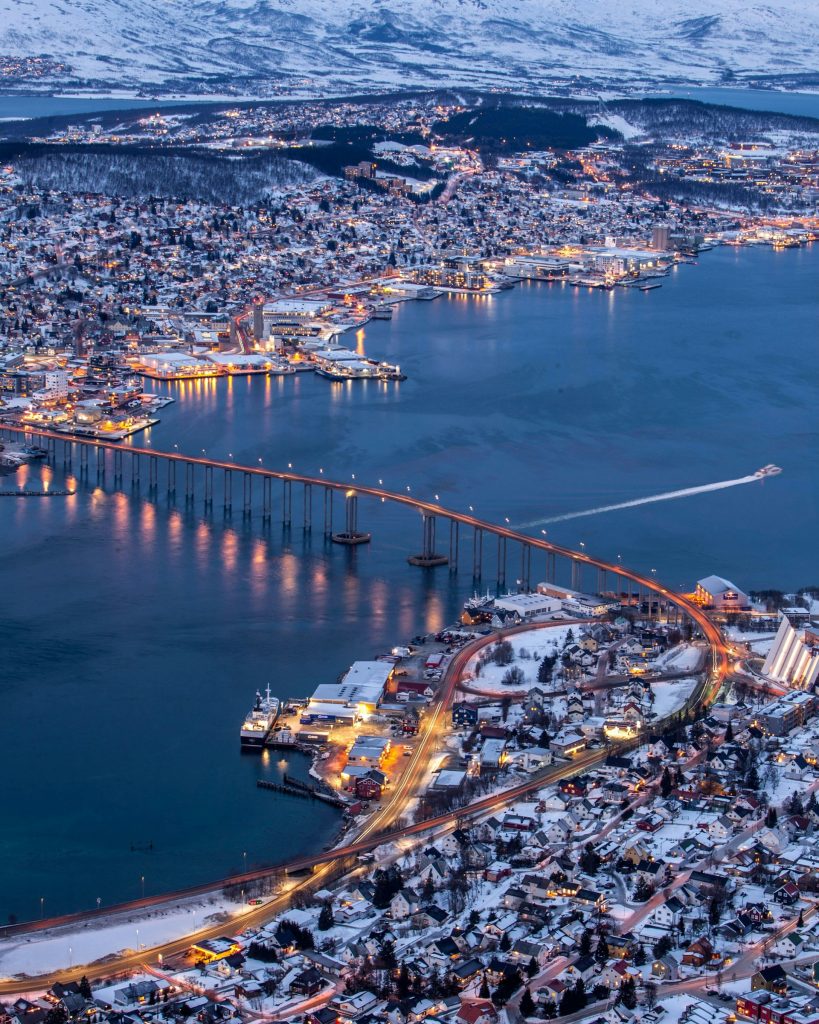
The reason whales come to the Tromsø region is simple: food. During winter, huge amounts of herring move into the fjords of Northern Norway. The whales follow this food source, especially humpback whales and orcas. The exact location of the whales can vary from year to year, so tour operators need to follow the movement of the herring and the whales.
In earlier years, many whale safaris were closer to Tromsø itself. These days, the whales are often found farther north and east, especially around the fjords near Skjervøy. This means that many tours from Tromsø involve a longer boat journey or a combination of bus and boat transport. This can make the day feel long, but it is also part of the Arctic adventure.
When Is The Best Time To Go Whale Watching In Tromsø?
The whale watching season in Tromsø is mainly a winter activity. The season usually begins around late October and continues until late January, though this can vary slightly from year to year depending on the whales and herring.
For most visitors, November and December are the best months for a whale safari in Tromsø. These months often have strong whale activity, and there is a good chance of seeing both humpback whales and orcas. January can also be good, especially early in the month, but the whales may begin leaving the area as the herring move.
One important thing to understand is that winter days in Tromsø are short. From late November to mid-January, the sun does not rise above the horizon because Tromsø is in the polar night period. This does not mean it is completely dark all day. Around midday, there is often a beautiful blue twilight, and this soft Arctic light can make the whale safari feel even more magical.
The limited daylight is one reason why tours often start early in the morning. Operators want to reach the whale areas during the brightest part of the day. If you are not a morning person, prepare yourself for an early start.
What Whales Can You See On A Tromsø Whale Safari?
The two main species you are likely to see on a whale safari in Tromsø are humpback whales and orcas.
Humpback whales are large, powerful baleen whales known for their long pectoral fins and spectacular feeding behavior. Seeing one lift its tail before diving is a classic whale watching moment, and it is something many visitors hope to photograph. They can be calm and slow at the surface, but they can also become very active when feeding.
Orcas, often called killer whales, are actually the largest members of the dolphin family. They are highly social animals that often travel in groups. Watching a pod of orcas move together through a cold Norwegian fjord is an incredible experience, especially when they surface close enough that you can hear them breathe.
You may also see other marine life, including sea eagles, harbor porpoises, and seabirds. The scenery itself is also a major part of the experience. Snow-covered mountains, dark fjords, fishing villages, and Arctic light make the journey beautiful even during the quieter parts of the tour.
What A Whale Safari From Tromsø Is Like
A typical whale safari from Tromsø starts early in the morning. Depending on the tour, you either board a boat directly in Tromsø or take a bus to another departure point farther north. If the tour uses bus transport, it is usually because the whales are currently located far from Tromsø, and using a bus for part of the trip reduces the time spent on the open sea.
Boat types vary. Some tours use large, comfortable catamarans with indoor seating, toilets, warm drinks, and viewing decks. Others use smaller rigid inflatable boats, often called RIBs, which are faster and more adventurous. The larger boats are better for families, photographers with expensive gear, and people who want comfort. RIB tours can feel more intimate and exciting, but they are colder and more physically demanding.
Once the boat reaches the whale area, the crew will search for signs of whale activity. This may include whale blows, birds gathering over feeding fish, or other boats in the area. Responsible tour operators keep a respectful distance and avoid disturbing the animals. The goal is to observe natural behavior, not chase the whales.
Some days are full of action, with several whale sightings and active feeding. Other days are quieter, with only brief sightings. This is wild nature, not a zoo, so flexibility is important.
How Much Does A Whale Safari In Tromsø Cost?
Whale safaris in Tromsø are not cheap, but they are usually well-organized and include professional guides, warm flotation suits or insulated clothing, safety equipment, and transport. Prices vary depending on the company, boat type, and whether the tour includes food.
As a general expectation, a whale safari from Tromsø can cost from around 1,500 NOK to over 3,000 NOK per person. Larger boat tours are often cheaper than small RIB tours, while premium tours with smaller groups tend to cost more.
For families, this can become a significant expense. Still, many visitors consider it worth the price because whale watching in Tromsø is a once-in-a-lifetime type of experience. My personal advice is to choose based on safety, ethics, and comfort rather than simply picking the cheapest option.
How To Choose A Good Whale Safari Tour
There are many whale safari operators in Tromsø, and the quality can vary. The most important thing is to choose a company that puts whale welfare first. A good operator will follow responsible whale watching guidelines, keep a respectful distance, and avoid blocking or chasing the animals.
You should also think about the type of boat that suits you best. If you get seasick easily, a larger boat may be a better choice. If you want a more adventurous experience and do not mind cold wind and splashing water, a RIB tour can be exciting.
Read the tour description carefully before booking. Check how long the tour lasts, whether transport is included, what kind of clothing is provided, and whether food or hot drinks are included. Also check the cancellation policy. Winter weather in Northern Norway can be rough, and tours may be canceled if conditions are unsafe.
Never book a whale safari that promises guaranteed whale sightings in a way that sounds unrealistic. No responsible company can control wild animals. Some operators may offer a second tour or partial refund if no whales are seen, but this depends on the company.
What To Wear On A Whale Safari In Tromsø
Dressing correctly is essential. Even if the temperature in Tromsø does not look extremely cold on paper, standing outside on a boat in Arctic winter can feel freezing. Wind, sea spray, and long periods of standing still make it much colder than a normal walk in the city.
Wear warm wool base layers, a thick sweater or fleece, insulated winter pants, and warm socks. Wool is much better than cotton because it keeps you warmer even if it becomes damp. You should also bring a warm hat, gloves or mittens, and a neck warmer.
Many tour operators provide thermal flotation suits, but you should not rely on this as your only warm layer. Think of it as an extra layer on top of proper winter clothing. Good winter boots are also important, especially if you will be standing on deck for long periods.
I always recommend bringing spare gloves. It is very easy to get your gloves wet when handling a camera or touching cold railings, and having a dry pair can save the day.
Should You Bring A Camera?
Yes, but manage your expectations. Photographing whales can be difficult, especially in winter light. The whales surface quickly, the boat moves, and your hands may be cold. If you are using a phone, you may still get nice photos of the scenery, but whale photos can be challenging unless the animals are close.
A camera with a zoom lens is useful, but do not spend the entire trip looking through the viewfinder. Some of the best moments are better experienced directly. I have seen many visitors become so focused on getting the perfect photo that they almost miss the feeling of actually being there.
Bring extra batteries or a power bank, because cold weather drains batteries quickly. Keep spare batteries close to your body inside a warm pocket.
Can You See The Northern Lights On The Same Day?
Yes, it is possible to go whale watching during the day and hunt for the northern lights in the evening, but it makes for a very long day. Whale safaris often start early and can last many hours. By the time you return to Tromsø, you may be tired, cold, and ready for dinner.
If you have several days in Tromsø, I recommend separating these activities. Do the whale safari one day and a northern lights tour another evening. This gives you more energy for both experiences and also gives you more flexibility if the weather changes.
That said, if your trip is short, it is possible to do both. Just be realistic about your energy level and dress warmly for both tours.
Is A Whale Safari In Tromsø Suitable For Children?
A whale safari can be suitable for children, especially on larger boats, but it depends on the child. The tours can be long, cold, and sometimes rough. Younger children may become tired or bored during the journey, especially if whale sightings are brief.
For families, I would usually recommend a larger boat tour with indoor seating and toilets. RIB tours often have age, height, or health restrictions, and they are not ideal for very young children.
Bring snacks, warm clothing, and something quiet for children to do during the travel time. Also explain in advance that whale sightings are not guaranteed. This helps avoid disappointment if the day is slower than expected.
Is Whale Watching In Tromsø Ethical?
Whale watching can be ethical when it is done responsibly. The best tours observe whales from a respectful distance, avoid sudden changes in speed, and do not interfere with feeding or movement. Responsible tourism can also help people appreciate marine life and support local communities.
However, whale watching can become problematic if too many boats crowd the animals or behave aggressively. As a visitor, you can help by choosing operators that emphasize responsible whale watching. Look for companies that talk openly about animal welfare, safety, and respectful behavior around wildlife.
You should also avoid putting pressure on guides to get closer. A distant, calm whale sighting is better than a close encounter that stresses the animals.
Practical Tips Before Booking
Book early if you are visiting during the peak winter season. Tromsø is very popular in November, December, and January, and the best tours can sell out.
Plan your whale safari early in your trip rather than on your last day. If the weather causes a cancellation, you may have a chance to rebook for another day. This is especially useful in winter, when storms and rough seas can affect boat tours.
Eat breakfast before the tour, even if food is included. The day can be long, and cold weather makes you burn more energy. If you are prone to seasickness, consider bringing motion sickness tablets and taking them before departure according to the instructions.
Most importantly, arrive with patience. Arctic wildlife does not follow a tourist schedule. The waiting, searching, and uncertainty are part of the experience.
What Makes A Tromsø Whale Safari So Special
A whale safari in Tromsø is not just about ticking whales off a travel bucket list. It is about being out in the Arctic winter, surrounded by mountains, fjords, cold air, and soft blue light, while some of the ocean’s most impressive animals feed in the waters around you.
The experience can be quiet and emotional. The moment you hear a whale breathe at the surface, or see the black dorsal fin of an orca cutting through the water, the cold and early start suddenly feel completely worth it.
For many visitors, Tromsø is already a dream destination because of the northern lights, snow, reindeer, and Arctic scenery. Adding a whale safari makes the trip even more memorable. Just remember that the best whale safari is one where both people and whales are respected. Choose a responsible tour, dress warmly, and give yourself enough time to enjoy the experience properly.