Norway might be famous for fjords and Northern Lights, but ask any Norwegian what to pack for a hike or a cabin weekend and you will hear about chocolate. We are a small country with a big sweet tooth, and our bars are deeply tied to everyday life, holidays, and long Sunday walks. If you want to taste Norway in one bite, start with our classic chocolate bars.
If you only have time to try a few, start with Kvikk Lunsj for hiking culture, Freia Melkesjokolade for our signature creamy milk profile, Stratos for airy crunch, and Troika when you want something layered and indulgent. Those four give you a strong introduction to Norwegian chocolate, from simple and pure to playful and rich.
Curious why Norwegians argue about the best break pattern on a Kvikk Lunsj, or why oranges show up with chocolate at Easter? Let’s take a deeper dive into the world of Norwegian chocolate bars.
Kvikk Lunsj
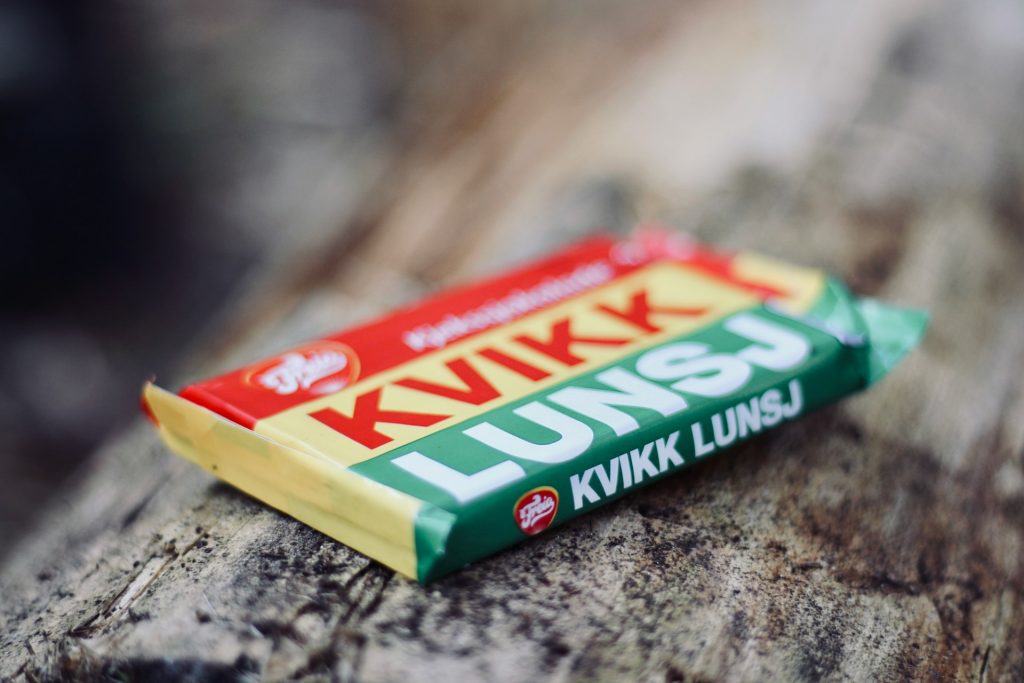
If you plan to do only one very Norwegian thing, it is this: eat a Kvikk Lunsj on a hike, preferably above a treeline with a thermos of coffee. Kvikk Lunsj has crisp wafer fingers coated in milk chocolate, packaged in red, yellow, and green stripes that make Norwegians instantly nostalgic. It is practical, light to carry, and the four-finger format is perfect for sharing on a summit. Many of us grew up being taught to split it neatly along the lines. There are great debates about the correct way to break the fingers. We take it more seriously than we admit.
The taste is balanced rather than overly sweet. The chocolate coating is creamy and the wafers are fresh and snappy when you buy it at a normal supermarket. At Easter, Kvikk Lunsj becomes almost a national ritual. In my family, the backpack always had Kvikk Lunsj and oranges, a pairing that cuts the sweetness and feels like sunshine in the snow. If you are visiting around spring, you will see massive displays in every store. That is not a marketing gimmick. We really do eat that much of it.
Freia Melkesjokolade
This is our cornerstone chocolate. Silky and comforting, Freia Melkesjokolade is what many Norwegians imagine when they hear the word chocolate. The bar format is simple, but the flavor is rich and milky with a soft melt that makes it hard to put away after just a square or two. It is the bar we bring to a movie night, a quick stop on a road trip, or a neighbor visit. If you want to understand our palate, start here.
There are endless seasonal and limited versions, but the classic is the benchmark. I like it slightly cool from the fridge so the snap is clean, then letting it melt on the tongue. With coffee, it is a complete little dessert. If you want a gentle step up in texture, the varieties with crisp pieces or small cookie bits are fun without losing the smooth character.
Firkløver
Freia’s Firkløver adds whole hazelnuts to that same creamy milk chocolate. It brings a satisfying crunch and a roasted nuttiness that feels a little more grown up. The ratio of nut to chocolate is generous and you can actually see and taste the hazelnuts. This is the bar I often bring to a dinner when a heavy dessert feels like too much. Break it into rustic pieces, set it next to the coffee, and it disappears quickly.
If you have nut allergies, skip this one and read labels carefully. Norwegian chocolate labeling is clear, but cross contamination warnings still matter.
Stratos
Stratos is our bubbly, aerated milk chocolate. Think of it like a lighter, fluffier experience where thousands of tiny bubbles change the mouthfeel. It snaps, but then collapses into a quick melt that feels playful. Kids love it, but grownups reach for it too, especially the versions with a caramel note. When I need a small pick me up at a gas station after a long winter drive, Stratos is my go to because it gives a hit of chocolate without feeling heavy.
There are seasonal shapes around holidays that are more novelty than gourmet, but the base bar is reliable and well loved. If you want to compare textures across Norwegian bars, taste Stratos side by side with Melkesjokolade. You will notice the same chocolate style with a totally different feel.
Troika
If you like layered confectionery, Troika is a must. It is a three layer bar that combines a soft raspberry jelly, marzipan, and a truffle like chocolate layer, all covered in dark chocolate. The flavor is elegant and a bit old school in the best way. The raspberry layer is bright and not too sweet, the marzipan is fragrant, and the chocolate casing has the right thickness to hold everything without cracking apart.
I keep Troika for slower moments. It is a bar to slice and share with tea, or to enjoy after dinner when you want layers of flavor rather than a simple sugar rush. If you usually avoid marzipan, this might convert you, because the balance is well judged.
Smash!
Norway has a warm relationship with salty snacks, and Smash! leans into that. It is corn cone pieces coated in milk chocolate, and while it comes in bags more often than bar form, you will also find bar versions and thick slabs. The salty sweet combination is the whole point. It is incredibly addictive. A friend once described it as the Norwegian answer to chocolate covered pretzels. Not quite the same, but you will get the idea.
Smash! is what shows up at cabin weekends and movie nights. If you try it once, do not buy the biggest bag on the first go. Start small, because it disappears fast and you might shock yourself.
Walters Mandler
Another Norwegian classic is Walters Mandler, whole almonds roasted and coated with milk chocolate and a whisper of salty crunch. Like Smash!, it is often sold in bags or slabs, but you can find bar formats and it deserves a spot on this list because Norwegians treat it like a chocolate bar experience. The almonds are crisp without being hard, and the light salt makes the chocolate feel rounder.
This is my travel day choice, partly because the almond protein makes it feel more satisfying than a plain bar. With a black coffee at the airport, it tastes like calm.
Japp
If you enjoy nougat and caramel in a soft chew, Japp will feel familiar. It is Norway’s take on the fluffy nougat caramel profile loved worldwide, coated in milk chocolate and sized for a quick treat. Compared with similar international bars, Japp is a touch sweeter on the caramel and softer on the bite. It is the one I grab from a kiosk when I am between buses and need something quick.
You can find small, regular, and king size versions. For visitors, the small size is perfect for tasting through several Norwegian bars in one afternoon without overdoing it.
Hobby
Hobby is a nostalgic wildcard. It combines a light fruit jelly and vanilla flavored cream under a chocolate coating. The texture contrast is big, and the flavor feels like a time capsule from the candy shelves of the 80s and 90s. Norwegians argue about this one too. Some of us grew up loving it and never stopped. Others shake their head and reach for Troika instead. If you want to taste an offbeat bit of Norwegian candy history, try Hobby. It will either charm you or confuse you, which is part of the fun.
Premium Bean to Bar: Fjåk and Friends
While the mass market bars are the backbone of Norwegian chocolate culture, there is a growing craft scene. Fjåk from Hardanger is the name you will see in specialty shops. These are glossy dark chocolate bars with single origin cacao, often paired with Nordic ingredients like lingonberry or brown cheese crumbs in limited runs. This is a different category from a kiosk bar, but if you care about cacao flavor and want a bar to savor slowly, pick up a Fjåk bar to compare with our classic milk chocolate tradition.
You may also find small makers popping up in larger cities and in food halls. The packaging is beautiful and they make excellent gifts that feel uniquely Norwegian.
Where To Buy Norwegian Chocolate Bars
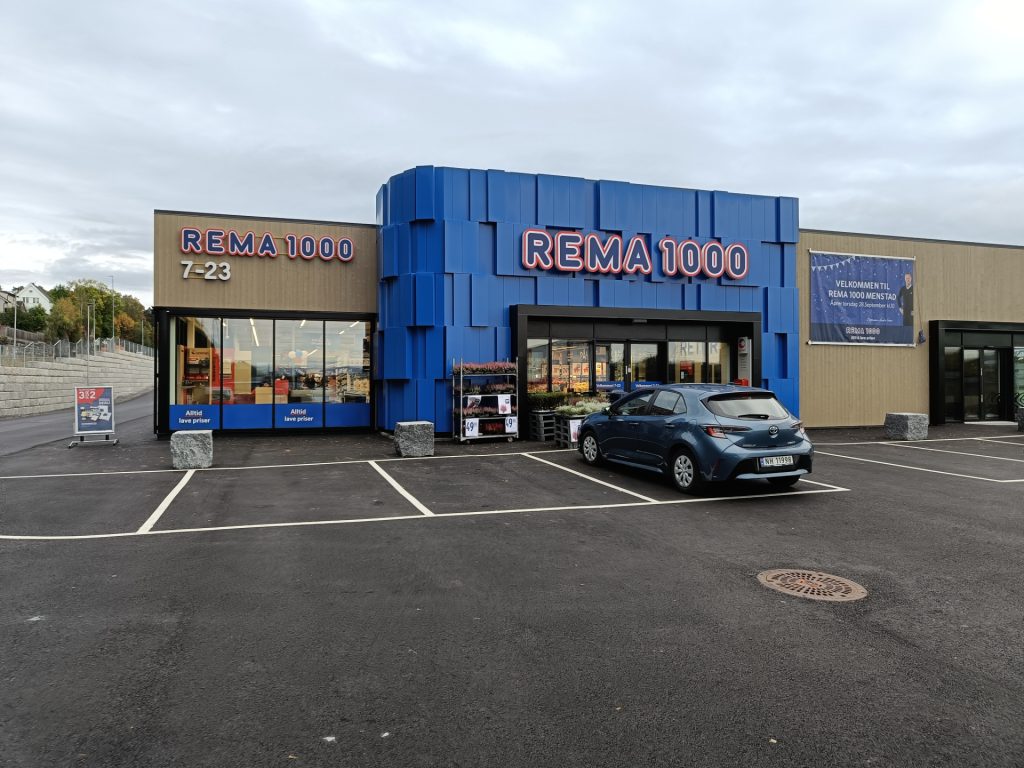
You do not need a specialty store. Walk into any Kiwi, Rema 1000, Coop, or Narvesen kiosk and you will find the staples. Gas stations have excellent chocolate selections because Norwegians treat long drives like fuel stops for the car and the passengers. In airports, the duty free shops stock giant versions of the classics, which are great for sharing at home.
If you plan to bring chocolate back, remember two things. First, check your country’s customs rules for food, but chocolate is usually fine. Second, if you are traveling in the middle of summer, keep bars in your carry on and away from direct sun. The chocolate will bloom or soften if it gets too warm. In winter, the opposite is the problem. Let cold bars come to room temperature before opening so they do not snap into crumbles.
Price, Sizes, and Value
Norwegian prices are higher than many visitors are used to, but chocolate is still an affordable indulgence. Standard bars typically run from small single serves to larger sharing slabs. If you are sampling widely, buy the smallest size and make your own tasting flight. For a family gift, the big tablet format of Melkesjokolade or Firkløver is a safe bet. If you want something with wow factor, the extra large Kvikk Lunsj that shows up seasonally is a conversation starter.
Norwegian stores often run promotions like two bars for a discount. Look for the labels on the shelf. It is not a trick; it is just how we keep snacks flowing through movie nights and road trips.
Dietary and Allergy Notes
Milk and nuts are common in Norwegian bars. Always check labels if you have allergies. Gluten is less common but still shows up in wafer and cookie based varieties. Vegan chocolate options are growing, especially among premium makers, but mainstream kiosks are still dominated by milk based bars. If you need dairy free, look for dark chocolate from craft makers or check larger supermarkets for plant based alternatives. For strict vegetarians, gelatin is not typical in our chocolate bars, but jelly layers can vary, so read the ingredient list.
How Norwegians Actually Eat Chocolate
There is a rhythm to it. Kvikk Lunsj goes in hiking backpacks all year, but it owns Easter. Melkesjokolade belongs everywhere, from a quiet Tuesday to a cabin weekend. Stratos feels like a gas station treat. Troika is for the sofa after dinner. Smash! turns up when friends bring snacks to share and nobody pretends it will last the whole movie.
We pair chocolate with coffee more than tea. That combination is almost a national reflex. On the trail, chocolate plus an orange is the classic. At home, chocolate often joins a bowl of seasonal berries in summer or a few slices of brown cheese on crispbread in winter. It sounds odd until you try it, but the sweet salty balance works.
A Simple Tasting Plan For Visitors
If you want a fast but thoughtful introduction, try this order in one afternoon with a friend. Start with one square of Freia Melkesjokolade to calibrate your palate. Move to Stratos to notice the texture change. Break a Kvikk Lunsj finger and enjoy the wafer crunch. Taste Firkløver to add nuts and see how it changes the melt. Then slow down with a small slice of Troika to appreciate layers. Close with a bite of Smash! to end on salty sweet. You will understand Norway’s chocolate language by the final bite.
Packing Chocolate Into Your Trip
Chocolate is an easy souvenir that actually gets eaten. It is also a way to join our everyday culture for a moment, whether that is a summit break with Kvikk Lunsj or a late night Stratos from a 7 Eleven. If you want to bring a little Norway home, pack a few bars, a bag of Smash!, and a craft bar from Fjåk. Put them on the table, make coffee, and tell the story of where you were when you first tasted them. That is the real flavor you are sharing.
And if someone asks which bar is best, you already know the real answer. It depends on the day, the weather, and who you are with. That is the Norwegian part.