Spring is one of the most underrated times to visit Lofoten. The islands are waking up after a long Arctic winter, the fishing villages are quieter than in summer, and the landscape often gives you a beautiful mix of snow-covered peaks, green lowlands, bright beaches, and long evenings.
The best things to do in Lofoten in spring include visiting the fishing villages, seeing stockfish drying on wooden racks, hiking lower trails, kayaking in sheltered waters, joining a wildlife or sea eagle safari, surfing at Unstad, enjoying the beaches, visiting museums, and experiencing the northern lights in early spring or the midnight sun from late May. Lofoten’s spring season is known for mountain hikes, boat trips, drying fish racks, returning birds, and long bright days.
Spring in Lofoten is not quite winter and not quite summer, and that is exactly what makes it special. Let’s take a deeper dive into the best things to do in Lofoten in spring.
Visit The Famous Fishing Villages Without The Summer Crowds
One of the best things to do in Lofoten in spring is simply to drive between the fishing villages and spend time exploring them slowly. Places like Reine, Hamnøy, Sakrisøy, Nusfjord, Henningsvær, Ballstad, and Å are beautiful all year, but spring gives them a calmer and more authentic feeling.
In summer, these villages can become very busy with rental cars, campervans, tour buses, and photographers. In spring, especially in April and early May, you often get more space to enjoy the harbors, red rorbu cabins, mountain views, small cafés, and local galleries. Reine is especially dramatic in spring, with sharp mountains rising behind the village and patches of snow still visible high above the fjord.
Henningsvær is another spring favorite. It has a more creative and lively atmosphere, with art galleries, cafés, climbing culture, and the famous football field surrounded by sea. In spring, it feels lived-in rather than overcrowded, and that makes it easier to enjoy the village at your own pace.
See Stockfish Drying On The Hjell
Spring is the best season to see one of Lofoten’s most iconic traditions: stockfish drying on wooden racks, known as hjell in Norwegian. This is not a tourist display. It is a real part of coastal life in Northern Norway.
The fish is usually Norwegian Arctic cod, Atlantic cod (Gadus morhua), caught during the winter fishing season and hung outside to dry in the cold, salty air. By spring, you will see thousands of fish hanging on wooden racks around places like Henningsvær, Reine, Å, Ballstad, and Svolvær.
The smell can be strong, especially if you are not used to it, but it is part of the experience. For locals, this smell means tradition, work, export, and history. Lofoten’s fishing culture has shaped the islands for centuries, and spring is when you can see that connection most clearly. It is one of those experiences that reminds you that Lofoten is not just a pretty landscape. It is a living coastal community.
Go On Short And Safe Spring Hikes
Lofoten is famous for hiking, but spring hiking requires a bit of judgment. Some of the most famous mountain hikes may still have snow, ice, mud, or avalanche risk, especially in April and early May. Do not assume that a trail is safe just because it looks short on a map. Conditions change quickly here.
That said, spring can be excellent for lower hikes and coastal walks. Good options often include areas around Haukland Beach, Uttakleiv, Eggum, Nusfjord, Å, and parts of the coastline near Reine and Ballstad. These places give you wonderful views without necessarily committing to a steep mountain route.
Later in spring, especially from late May into June, more trails start becoming accessible. May is often when the landscape begins changing quickly, with longer days, greener slopes, waterfalls, and snow still shining on the higher peaks.
My personal advice is to ask locals, check current trail conditions, and be willing to change plans. In Lofoten, the best hike is not always the most famous one. It is the one that matches the conditions that day.
Experience The Northern Lights In Early Spring
If you visit Lofoten in March or early April, you may still have a chance to see the northern lights. This is one of the big advantages of early spring. You get longer days than in midwinter, but the nights can still be dark enough for aurora hunting.
The northern lights season in Lofoten generally runs from September to April, with the best chances when the sky is dark, clear, and there is enough solar activity.
For the best chance, get away from streetlights and look for open views toward the north. Good places can include beaches like Uttakleiv, Haukland, Ramberg, and Flakstad, depending on cloud cover and wind. A clear sky matters just as much as aurora activity, so flexibility is important.
By late April and May, the nights become too bright for proper northern lights viewing. At that point, Lofoten shifts into its bright-night season, which is magical in a completely different way.
Enjoy The Start Of The Midnight Sun Season
Late spring in Lofoten is special because the nights almost disappear. The midnight sun season in Lofoten is generally from late May to mid July, although exact dates vary slightly by location.
This means that a late May or June trip gives you the chance to explore in soft golden light at times when most people would normally be sleeping. A beach walk at midnight, a quiet drive through fishing villages, or a late evening hike can become one of the highlights of the entire trip.
The light is one of the main reasons I love Lofoten in spring. It is not just “more daylight.” It changes the mood of the whole place. The mountains glow, the sea reflects pastel colors, and even familiar roads feel new when you drive them late in the evening.
Visit Lofoten’s Beautiful Beaches
Lofoten’s beaches are among the most beautiful in Norway, and spring is a great time to visit them. The water is cold, of course, but the scenery can look almost tropical when the sun hits the white sand and turquoise sea.
Some of the best beaches to visit in spring include Haukland Beach, Uttakleiv Beach, Ramberg Beach, Unstad Beach, Flakstad Beach, and Skagsanden Beach.
In spring, these beaches are usually much quieter than in summer. You can walk along the sand, photograph the mountains, look for seabirds, or simply sit with a thermos of coffee and enjoy the Arctic coastline.
Bring warm clothes even if the sun is shining. The wind can be sharp, and weather in Lofoten changes fast. A sunny beach visit can turn into a cold rain shower in minutes.
Try Arctic Surfing At Unstad
Surfing might not be the first thing you associate with Northern Norway, but Lofoten has become one of Europe’s most interesting cold-water surfing destinations. Unstad is the best-known surfing village, and it is possible to surf here in spring with the right equipment and guidance.
Spring surfing in Lofoten is cold, but that is part of the appeal. You will need a thick wetsuit, gloves, boots, and usually a hood. Beginners should book a lesson or go with experienced local operators, since Arctic surf conditions are not something to underestimate.
Even if you do not surf, Unstad is worth visiting. The drive there is beautiful, the beach is dramatic, and the village has a special end-of-the-road feeling that fits Lofoten perfectly.
Go Kayaking In Sheltered Waters
Kayaking is one of the best ways to experience Lofoten from a different perspective. From the water, the mountains feel even bigger, and the villages look like they are tucked into the edge of the sea.
In spring, guided kayaking is the safest and most practical choice for most visitors. The water is cold, the weather can change quickly, and local knowledge matters.
Reine, Svolvær, Henningsvær, and Ballstad are all good areas to look for guided trips, depending on where you stay. A calm evening paddle in spring light can be unforgettable, especially in late May and June when the days are very long.
Join A Wildlife Safari Or Sea Eagle Trip
Spring is a rewarding time for wildlife in Lofoten. Birds return, marine life becomes more active, and boat trips start feeling more comfortable as the days grow longer. One of the most popular experiences is a sea eagle safari, where you may see the white-tailed eagle (Haliaeetus albicilla) soaring over the coast.
Svolvær is a common starting point for RIB safaris and boat trips into the surrounding waters, including trips toward Trollfjord.
Dress warmly for boat trips in spring. Even if the weather looks mild on land, it can feel much colder on the sea. Windproof outer layers, gloves, and a hat can make the difference between a fantastic trip and a freezing one.
Visit Lofotr Viking Museum
Spring weather in Lofoten can be unpredictable, so it is smart to have a few indoor or partly indoor activities planned. Lofotr Viking Museum at Borg is one of the best cultural attractions in the region.
The museum is built around a reconstruction of the largest Viking longhouse ever found from the Viking Age, and the reconstructed longhouse is 83 meters long.
This is a good stop if you are traveling with children, interested in history, or simply need a break from wind and rain. It also gives context to Lofoten’s long human history. The islands may feel remote, but they have been connected to trade, fishing, farming, and power networks for a very long time.
Explore Svolvær And Henningsvær
Svolvær is the main town in Lofoten and a practical base for spring travel. It has restaurants, hotels, shops, tour operators, galleries, and good transport connections. It is not the most postcard-perfect place in Lofoten, but it is useful, lively, and surrounded by beautiful scenery.
Henningsvær, on the other hand, is smaller and more atmospheric. It is one of the best places in Lofoten for cafés, local art, photography, and wandering without a strict plan. In spring, you get the bonus of fewer visitors and a stronger sense of everyday life.
A good spring day could include coffee in Svolvær, a short boat trip, then an afternoon in Henningsvær before driving west toward Gimsøy or Leknes in the evening light.
Take A Scenic Road Trip Along The E10
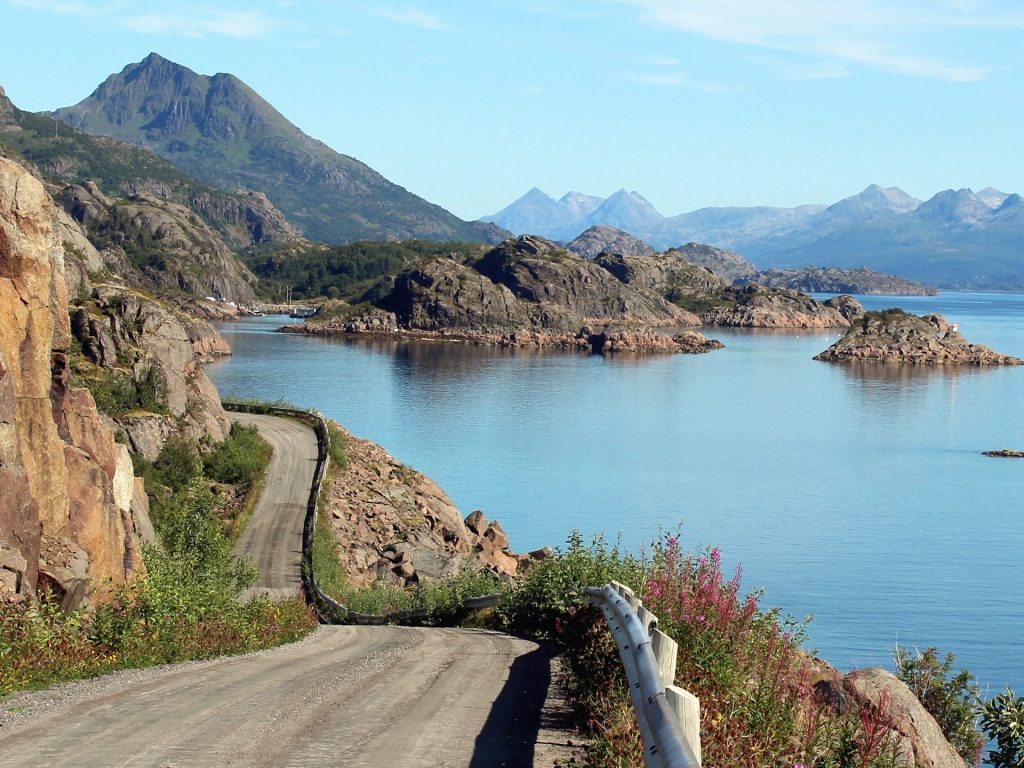
The E10 road through Lofoten is one of Norway’s great scenic drives. In spring, it is especially varied because the landscape changes from island to island. You might see snow on the peaks, green fields near the coast, fish drying on racks, empty beaches, and dramatic clouds moving over the sea.
A good route is to start in Svolvær and drive west toward Henningsvær, Leknes, Ramberg, Reine, and finally Å. You do not need to rush. Some of the best moments in Lofoten happen when you stop at a viewpoint, take a small side road, or wait for the weather to shift.
Spring driving conditions can still be wintry, especially in April, so check the forecast and road conditions before setting out. Late May and June are usually easier, but snow showers and strong winds can still happen.
Eat Local Seafood
Lofoten is one of the best places in Norway to eat seafood, and spring is closely tied to the fishing season. You will find cod, stockfish dishes, fish soup, fish burgers, shrimp, and other local seafood on menus around the islands.
Sakrisøy, Henningsvær, Svolvær, Nusfjord, and Reine all have good food stops, although opening hours can vary more in spring than in summer. Check times before driving far for a specific restaurant.
For a simple and very Norwegian experience, buy something local, sit outside if the weather allows, and eat with a view of the sea. In Lofoten, the setting often matters just as much as the food.
Stay In A Rorbu By The Water
A spring trip to Lofoten feels much more complete if you stay in a rorbu, one of the traditional fishermen’s cabins that have been converted into guest accommodation. Many are located right by the water, often with views of boats, mountains, and fishing racks.
Spring is a great time to book a rorbu because prices may be lower than in peak summer, and availability is often better. The experience is also more peaceful. You can wake up to gulls, fishing boats, and changing light instead of heavy tourist traffic.
For the most scenic stays, look around Reine, Hamnøy, Sakrisøy, Nusfjord, Henningsvær, and Ballstad. For convenience, Svolvær and Leknes can be better if you want easier access to shops, restaurants, and transport.
Pack For Several Seasons In One Day
The most important practical tip for spring in Lofoten is to pack for changing weather. You can experience sunshine, rain, wind, sleet, and warm spring light on the same day. This is normal here.
Bring a waterproof jacket, warm mid-layer, hat, gloves, sturdy shoes, and clothing you can layer. If you plan to hike, bring proper footwear and avoid relying only on sneakers. If you visit in April, be prepared for conditions that may still feel like winter. If you visit in June, expect more spring and early summer feeling, but still bring windproof and waterproof clothing.
Spring rewards flexible travelers. Keep your plans loose, follow the weather, and do not get too attached to one specific hike or activity. In Lofoten, the best thing to do is often the thing the weather allows that day.