Lofoten is famous for jagged mountains and fishing villages, but the beaches surprise most visitors first. White sand, clear turquoise water, and the kind of wide skies that make you feel small in the best way. Many of these stretches of sand sit beneath cliffs and peaks, which is why an easy swim can turn into a full-day adventure with hiking, surfing, or simply sitting on a rock watching puffed-up clouds drift by.
If you are looking for the best beaches in Lofoten, you are spoiled for choice. The local favorites I return to again and again are Haukland and Uttakleiv on Vestvågøya, Kvalvika for a short hike to a wild bay, and the remote pair of Bunes and Horseid that sit beyond the Reinefjorden. For families and quick stops, Rambergstranda and Skagsanden are reliable, easy to reach, and beautiful in all seasons. If you want waves, Unstad is Norway’s surf capital, with a proper community built around cold-water stoke.
Let’s take a deeper dive into the world of beaches in Lofoten, from easy picnic spots to remote sands where your footprints might be the only ones that day.
Haukland Beach: Calm Water and Classic Views
Haukland is one of the most photogenic beaches in Norway. The bay is well-sheltered, which is rare in Lofoten, so you often get glassy water that looks like the Caribbean until you try to swim. Even in July and August, expect water temperatures between 10 and 14 degrees Celsius. I like to walk the coastal path from Haukland toward Uttakleiv. It hugs the mountain and stays close to the sea, so you get fresh angles of the bay and the islands offshore.
There are toilets and usually a food truck or kiosk in high season, plus a parking system that keeps things orderly. Bring a windbreaker anyway, because the breeze can pick up suddenly. For sunset in late summer, the light hangs forever across the water and turns the sand pale pink.
Uttakleiv Beach: Midnight Sun Theater
Uttakleiv sits just through the tunnel from Haukland and feels wilder. The beach is a mix of sand and rounded stones, famous among photographers for its patterns and tide pools. In June and early July I often come here in the late evening. This is one of the best places in Lofoten to watch the midnight sun. The sun skims the horizon and swings slowly, casting long orange light across the boulders.
The parking area can fill up on good nights, so arrive early if you plan to stay long. Walk the short loop around the headland for wider views and fewer people. If you are sensitive to wind, hide behind the seaweed-draped rocks on the north side of the sand. It is a simple trick, but it makes a difference.
Kvalvika Beach: A Short Hike to a Wild Bay
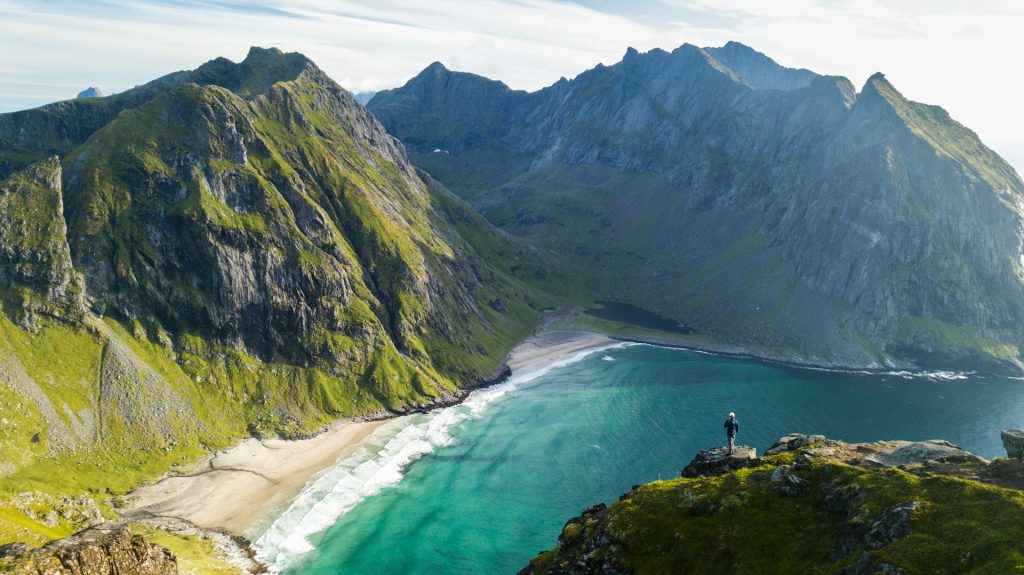
Kvalvika is the famous hike-in beach on Moskenesøya. The approach is not long, but it climbs steadily, and the first sight of the bay always makes people stop. Green slopes, cresting surf, and a sand strip that curves gently like a smile. Kvalvika used to be my standard “first hike” when friends visited. It is popular now, so I go early or late. The light after 8 p.m. in summer can be gorgeous, and you will often have more space.
Pack layers and a thermos. Even on sunny days it is cooler beside the water. Wild camping in Norway is allowed for one night at a time if you stay at least 150 meters from houses and avoid cultivated land, but at Kvalvika the ground closest to the beach is delicate and there can be local restrictions or guidance in summer. Look for posted signs and respect them. I usually camp higher up the slope where the views are better anyway.
Bunes Beach: Fjord Ferry and Big Horizons
Bunes is a glorious slice of sand that sits west of Reine, beyond the fjord. Getting there is part of the experience. You take a local boat from Reine to Vindstad, then walk a gentle path over a saddle to the beach. The moment the dunes come into view, the landscape opens and you feel the ocean breathing on the other side. I like to sit on the dune crest and watch the light move across the breakers. It is a place for unhurried days.
Plan around the boat schedule and bring everything you need. There are no services at the beach. If you get clear weather, stay a bit longer and watch the colors shift. In summer, the sun loops rather than sets, and the shadows stretch and shrink in slow motion.
Horseid Beach: Remote and Rewarding
Horseid requires a bit more effort than Bunes, with a longer ferry ride to Kjerkfjord and a hike across a boggy pass. The pay-off is a huge beach that feels like the edge of the world. You get the sense of the Atlantic pushing against the shore, and there is plenty of space to be alone. I bring waterproof shoes for the marsh sections and a dry bag for my extra layers. If you are chasing solitude in high season, Horseid is one of your best bets.
Rambergstranda: Easy Access, Big Scenery
Right beside the E10 in Flakstad, Rambergstranda is the classic quick stop. The sand here is soft, the color is light, and the mountain backdrops make even a five-minute break feel special. There is a small village center with a café and store, which makes it practical for families. On windy days, sea spray glitters across the beach. I like Ramberg as a “weather day” beach. You can enjoy the look of the place even if swimming is out of the question.
Skagsanden Beach: Aurora Reflections and Beginner Surf Days
Skagsanden, just a little farther along in Flakstad, has a wide, shallow profile that is perfect for reflections. Photographers love it at night when the northern lights ripple across the wet sand. In summer, it is a mellow place to walk barefeet and watch surfers. Tides change the character of the beach a lot, so check conditions before you commit to a long shoot or a lesson. There are toilets and usually a food truck in season.
Unstad Beach: Cold-Water Surf Capital
Unstad is a north-facing bay where swell funnels in nicely. There is a well-known surf camp and café, and a tight-knit community of locals who have built a small, welcoming scene around waves that can be excellent. If you have never surfed cold water, this is where to try it safely, with full winter suits available even in summer. On stormy days, Unstad becomes a show. You stand at the edge of the stones and feel the power of the sea hammering into the bay.
In winter, I come for cinnamon rolls and to watch the sets roll through when daylight is short. In summer, I come for a rental and a couple of hours in friendly lines. Either way, it is worth the detour.
Ytresand and the Fredvang Beaches
Near Fredvang there are several smaller beaches that show Lofoten at a gentler scale. Ytresand has bright sand and shallow water, good for paddling with kids on calm days. The surrounding pastures make a beautiful contrast between emerald grass and blue sea. Park carefully and never block farm access. I often combine Ytresand with a short ramble up the nearest hill for a picnic with a view.
Rørvikstranda and Beaches Near Henningsvær
Close to Henningsvær, Rørvikstranda is an easy, elegant option for a beach break before or after exploring the fishing village. The sand is clean and the water is clear, with small islands dotting the horizon. Henningsvær itself is worth a full wander. If you plan a beach day nearby, remember that traffic into the village can stack up in peak weeks. I like to go early, then reward myself with a late lunch in town.
When To Go for Beach Days
Lofoten’s beach season is longer than people think, but you choose your goal. For swimming and picnics, June through August is best, with long days and the midnight sun from late May into mid-July. For northern lights on reflective sand, September to March is the sweet spot, especially on cold, clear nights. Spring brings crisp light, fewer people, and snow still on the peaks, which looks stunning above bright beaches.
No matter the month, the weather can flip quickly. Pack a warm layer and a hat in summer, and do not underestimate the wind. The water remains cold year round, so a short swim is enough for most. Locals often bring a towel, a warm sweater, and hot chocolate instead of expecting a long soak.
Swimming and Safety
Lofoten beaches are not supervised and currents vary by location. Check the sea state before you swim, avoid rocky corners with visible currents, and never turn your back on the waves. If you feel a pull, swim parallel to shore until it lessens, then angle back in. A cheap pair of neoprene booties makes getting in and out more comfortable on stony sections. Parents should keep a close eye on children near the waterline, even on calm days.
Getting Around and Parking
The E10 is your main artery through the islands. Many beaches sit just off this road, which makes them accessible but also popular. Expect paid parking at several sites in high season and bring a card or app-ready phone. If you use the buses, plan ahead. For the ferry-access beaches like Bunes and Horseid, build your day around the boat departures and returns so you are not racing the clock.
In July and early August I often shift my schedule, visiting the most famous beaches early morning or late evening and picking smaller bays in the afternoon. It makes for a calmer day and better light.
Photography Tips
For Haukland and Uttakleiv, late evening is magical in summer. Kvalvika works well any time, but after 7 p.m. the crowds thin and the contrasts soften. Skagsanden shines at low tide when the wet sand mirrors the sky. If you carry a tripod, keep the legs out of the kelp line to avoid slipping. And one local habit worth copying: take a moment to put the camera away and just sit. The sound of small waves on Lofoten sand is worth a few minutes of full attention.
Responsible Travel and Local Etiquette
These are working islands and the beaches sit next to farms and small communities. Never camp on cultivated land, close any gates you pass, and do not fly drones near people, nesting birds, or grazing animals. Take all rubbish with you. In summer, portable toilets are set up at many popular spots. Use them if they are available, and if not, be discreet and go well away from the shoreline.
Bonfires look cozy, but check local fire bans in dry periods. If fires are allowed, build below the high tide line and leave no trace. The islands are tough, yet the thin vegetation near beaches scars easily. Stick to existing paths across the dunes.
What To Pack for Lofoten Beaches
Layers are your best friend: a windproof jacket, warm sweater, and quick-dry clothes. For comfort on the sand or stones, bring a lightweight camping mat. I always pack a thermos and snacks because services can be far apart and it is nice to linger. If you want to swim, a thin wetsuit or just neoprene booties and gloves make even a short dip more pleasant. A small trash bag is good practice so you can carry out your own litter and pick up a few stray bits you find.
Family-Friendly Picks
For an easy day with children, Rambergstranda, Skagsanden, and Haukland are the most straightforward. Each has relatively simple access and room to play. Ytresand is another gentle option if the wind stays light. Bring a kite for blustery days and a bucket for shell hunting. The water is cold, so set expectations for quick splashes instead of long swims.
Choosing Your Beach by Mood
If you want a postcard scene right by the road, start with Rambergstranda or Haukland. For a midnight sun picnic and the feeling of a big sky moving around you, go to Uttakleiv. If you crave a small adventure, pick Kvalvika. When you want genuine remoteness and time to think, build a day around Bunes or Horseid. For surf, lessons, or people-watching with a cinnamon roll, Unstad is the place. And if you are chasing northern lights on a reflective canvas, head to Skagsanden when the forecast looks promising.
Lofoten’s beaches reward patience. Give them time, and they will show different faces in one day: calm in the morning, moody by noon, and glowing at night. The trick is simple. Pack a little extra, stay a little longer, and let the islands set the pace.