Oslo sits where forest meets fjord, so our beaches are a mix of smooth rock shelves, sheltered coves, and a few stretches of golden imported sand. Summer days can be long and bright, with locals slipping out after work to swim, grill, and watch the late sunset over the islands. You do not have to leave the city to find clear water and a proper swim. From centrally located sea baths to family coves and island escapes, there is a beach for every mood.
If you are in a hurry, here is the short version: the best central swim is Sørenga Sjøbad, the classic peninsula choice is Huk and Paradisbukta on Bygdøy, the best island day goes to Hovedøya or Langøyene, Hvervenbukta and Ingierstrand are easy favorites south of the center, and Sognsvann and Ulsrudvann are top picks for lake swimming. Expect cool water, especially early in the season. Pack a towel, something warm for after your dip, and a little patience for seagulls who believe every picnic is community property.
Let’s take a deeper dive into the world of beaches in Oslo.
How Beach Culture Works in Oslo
Beach season starts when the birch trees turn green and the thermometer finally stops teasing us. Locals swim from late May to early September, although the brave go earlier and later. Water temperature usually sits in the fifties to mid-sixties Fahrenheit in early summer and can creep toward the high sixties in a warm August. Even on hot days the water stays fresh, which is part of the charm. We make a day of it: a swim, then coffee from a thermos or a waffle from a kiosk, then another swim.
Oslo beaches are public and free. Facilities vary. Many spots have toilets and seasonal kiosks, and most have freshwater showers. Grilling is common in designated areas or with a disposable grill where permitted. Bring a picnic blanket since much of our coastline is rocky. If you see locals lying on flat granite slabs like seals, that is the correct technique.
The Best Central Option: Sørenga Sjøbad
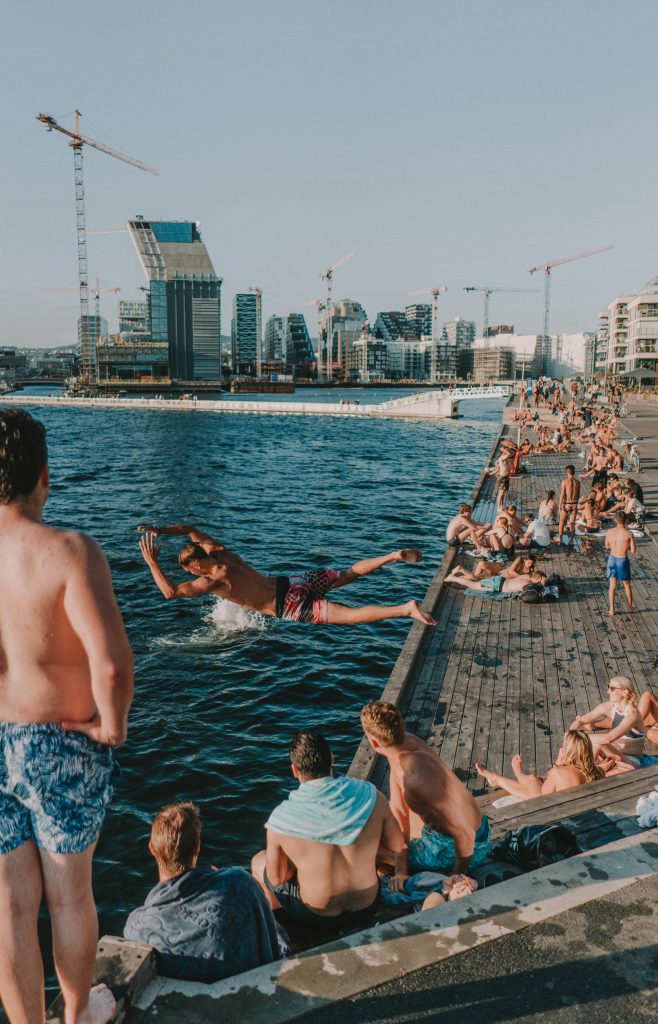
If you are staying downtown, Sørenga Sjøbad is the easiest win. It is a purpose-built seawater pool and swimming area right by the Barcode and Opera House neighborhoods. You can jump from wooden piers into deep, clean fjord water, or wade in from the shallow zone if you prefer a gentle start. There are ladders, lifebuoys, and usually plenty of sunbathing space on the timber decks.
I use Sørenga when I have an hour between meetings and the sun refuses to be ignored. It can get lively in the late afternoon. Arrive earlier on hot weekends to claim a spot and keep an eye on your belongings. Nearby cafés make it simple to grab coffee or ice cream, and the walk back along the harbor promenade is half the fun.
City Beach Near the Opera: Operastranda and Tjuvholmen City Beach
For a quick dip with a city backdrop, Operastranda sits by the Opera House with a small sandy area and easy access for families. It is perfect if you want to combine sights and a swim. Tjuvholmen City Beach, tucked beside the Astrup Fearnley Museum, is another central favorite with a sheltered little bay. The vibe here is urban and stylish, and the late light is beautiful along the quays.
These are not all-day beaches in my book: they are for a swim, a sun-warmed pause, then a stroll to dinner.
Bygdøy Classics: Huk, Paradisbukta, and Bygdøy Sjøbad
Bygdøy is Oslo’s beach heart. If you ask a local where to go on the first true summer day, this is it. Huk offers both a large family-friendly beach and a separate naturist area, divided and well signposted. The water is clean and the views across the fjord to Nesodden are lovely. Paradisbukta around the corner is a sheltered cove with softer sand and a more intimate feel. Bygdøy Sjøbad is smaller but cozy, handy for a quick dip after visiting the museums on the peninsula.
Bring a blanket and sandals for the rocks, and leave time for the coastal path that links the beaches. On a warm evening I will often swim at Paradisbukta, then walk the shoreline and watch the sky shift pink to gold.
Island Escapes: Hovedøya, Gressholmen, and Langøyene
The green islands just off Aker Brygge are the definition of summer in Oslo. Ferries shuttle out frequently in the warm months, and the ride itself is part of the day. Hovedøya is closest: a short hop brings you to meadows, monastery ruins, and several little beaches with both rock shelves and sandy pockets. The water is usually clear, and you can always find a quiet corner if you walk a few minutes.
Gressholmen is good for rambling and wildlife, with low-key swimming spots. Langøyene is the best island for a full beach day. It has a long sandy beach, generous lawns for picnics, and simple facilities that make it easy with kids. I grew up doing family get-togethers out here, chasing kites and losing soccer balls to the tide. Pack everything you need since lines for the kiosk can get long, and check the last ferry back so you do not end your night flagging down a friendly boat.
South and East of the Center: Hvervenbukta, Ingierstrand, and Friends
If you want a classic beach day with a little space, head south along the fjord. Hvervenbukta offers two sandy coves, grassy slopes, and a popular café in a historic house above the bay. It is excellent for families because the water stays fairly shallow near shore and there is room for picnic blankets even on busy days.
A little farther is Ingierstrand, a 1930s functionalist bathing complex with diving towers, sunbathing terraces, and a beachside restaurant. The architecture and fjord view make it feel nostalgic and glamorous at the same time. I like to swim, warm up against the sunlit concrete, then linger over a late lunch.
Other good options in the southeast include Katten and Nordstrand Bad, smaller and local, perfect if you want a swim and a quiet read.
West of Oslo: Kadettangen and Kalvøya
Just outside city limits in Bærum, Kadettangen is a wide, sandy spit with shallow water that warms up a touch faster than many Oslo spots. If you are traveling with kids, it is easy to recommend because visibility is great, there are toilets and showers, and the beach shelves gently. Kalvøya, a small island connected by bridge, offers paths, rock shelves, and small beaches that face different directions so you can hide from the wind.
These are good when the city beaches feel too crowded. Bring a kite or a frisbee and plan to stay until the sun dips behind the hills.
Lake Swimming: Sognsvann, Ulsrudvann, Nøklevann, and Bogstadvannet
Not every swim has to taste like salt. Oslo’s forest lakes are a world of their own, surrounded by pines and heather. Sognsvann is the classic, reachable by metro with a flat path circling the water. There are small sandy patches and plenty of grass, plus piers for those who prefer to jump in. It is busy for a reason: it is easy, social, and beautiful at sunset.
For something quieter and, in my opinion, even prettier, try Ulsrudvann or Nøklevann in Østmarka. The water often feels warmer than the fjord, and the rock shelves are perfect for drying out like a lizard. Bogstadvannet to the west has long shallow edges and lots of space to spread out. Lake days feel slower. Bring a paperback, berries, and a sweater for the ride home.
Getting Around Without Stress
You do not need a car. Public transport covers all the beaches mentioned, and summer ferries to the islands leave from Aker Brygge. If you are biking, our city is built for it. The harbor promenade takes you from the Opera to Sørenga, Tjuvholmen, and onward toward Bygdøy without complicated turns. For Bygdøy, you can combine tram or bus with a short walk. For Hvervenbukta and Ingierstrand, buses run regularly from downtown. For lakes like Sognsvann, hop on the metro. Parking fills early at popular spots; if you must drive, go before 10 a.m. on hot days.
Water Quality, Safety, and Jellyfish
Oslo tests bathing water at many beaches in summer. Results are posted on site or online, but the simple rule is this: after heavy rain, give the fjord a day to clear, especially near the city center. Lakes are a good backup on those days.
We do have jellyfish. The clear ones are harmless, the brownish ones with long trailing tentacles can sting. If you see a crowd hesitating at the ladder, watch the water for a minute and choose another entry point. Stings are annoying but usually mild. Vinegar can help, or just rinse with seawater and scrape off any visible threads with a card.
There are lifebuoys along many swimming areas but lifeguards are not standard. Do not jump from piers without checking the depth. If you are new to cold water, ease in slowly and warm up properly afterwards. A light jacket or hoodie makes all the difference when a sea breeze picks up.
Food, Grills, and Practicalities
Pack a picnic and a large bottle of water. Many beaches allow disposable grills on designated stands or gravel areas, but never place hot grills directly on wooden decks or grass. Take all ash and trash with you. Seagulls are enthusiastic and unashamed. Keep food in a bag or under a towel if you leave your spot for a swim.
Kiosks open seasonally and sell simple beach fare: ice creams, waffles, soda, coffee. Card is accepted everywhere. Toilets are usually available, though lines form at peak times. Soft shoes or sandals are smart since even sandy beaches often give way to rocks and shells at the waterline.
Etiquette That Keeps It Pleasant
Norwegians keep things relaxed but considerate. Music is fine if it stays at your blanket. Smoking is rare in family areas. Dogs are welcome in many places but check signs for rules and remember that some beaches forbid dogs during peak season. On Bygdøy, the naturist section at Huk is clearly marked, and people appreciate you respecting that boundary. In general, leave a little space between your blanket and your neighbor’s, greet people with a smile, and we will all get along.
Rain Plan and Shoulder Season Ideas
Summer storms pass quickly. If the fjord is choppy or the wind shifts cold, the lakes are often calmer. On cooler days, pair a short swim with a sauna session. Floating saunas around the harbor can be booked and they turn a chilly dip into a highlight. Some locals swim year-round. If you are tempted, bring a wool hat, neoprene socks, and a plan to warm up immediately afterward.
Choosing Your Beach By Vibe
If you want a quick dip between museum visits, pick Sørenga, Operastranda, or Tjuvholmen. For a full classic day with sand and space, go to Huk, Hvervenbukta, or Kadettangen. If you want a small adventure, take the ferry to Hovedøya or Langøyene and let the city skyline be your backdrop. For a calmer, nature-forward swim, head to the forest lakes and listen to the wind in the pines while you dry off.
Oslo’s beach scene is simple: clean water, long light, and a city that lets you step from café to cove in the same afternoon. Pack your towel and join us. The water is cooler than you expect but kinder than you think, and you will remember the feeling for a long time.